Door boot seal tear
This step-by-step repair guide walks you through fixing door boot seal tear on your Samsung WF50BG8300AV (Front Load). With the right tools and parts, most homeowners can complete this repair in 1–2 hours and avoid a costly service call.
🔨 Pro Tip from Dave
On the WF50BG8300AV, use part number DC64-03516A for the correct door boot seal replacement — don’t let a supplier substitute a generic fit. A mistake I see constantly is techs forgetting to fully reseat the outer retaining band in the front panel groove, which causes leaks to return within weeks. Also, inspect the door strike and hinge alignment before closing everything up, since misalignment is often what caused the original tear.
Part of our Top 20 Washing machine Models & Common Repair Issues Guide. Browse all washing machine repair guides for related models and issues.
“`html
Common Symptoms & Causes
If your Samsung WF50BG8300AV is experiencing a torn door boot seal, you may notice one or more of the following symptoms during or after a wash cycle.
- Water pooling on the floor directly in front of the washer after a cycle
- Visible cracks, tears, or holes along the rubber door gasket
- Musty or mildew odor coming from the drum area near the seal
- Clothes catching or snagging on the door seal during loading
Door boot seal tears are typically caused by normal wear and tear over time, sharp objects left in pockets damaging the rubber, or repeated exposure to harsh detergents that degrade the gasket material.
“`
Safety First
- Unplug the washing machine from the power outlet before starting any repair — never work on a live appliance.
- Shut off the water supply valve before disconnecting any water lines or hoses.
- Wear work gloves when handling metal brackets, sheet metal edges, or sharp components.
- Take photos with your phone before disconnecting any wiring harnesses or connectors.
- Work in a well-lit area with enough floor space to lay removed panels flat.
Tools & Parts Needed
Essential Tools
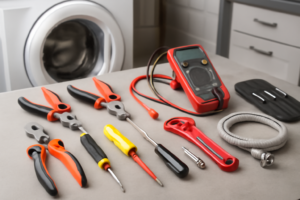
- Phillips #2 screwdriver
- ¼” nut driver
- Torx T20 screwdriver
- Multimeter
- Bucket and towels
Replacement Parts
Step-by-Step Repair Instructions
Step 1
Open the washer door and fold back the rubber pleats to expose the inner fold area and the drain hole at the bottom of the boot seal. You are looking for cracks, splits, or pinhole tears — even small ones will allow water to escape onto the floor during a cycle. Pay extra attention to the lower drain hole area, as standing water accelerates rubber degradation there first.
Step 2
Locate the wire spring retaining ring that runs around the outer edge of the door opening and holds the seal lip against the front panel. Insert a flat-head screwdriver into the groove at the 12-o’clock position to pry the wire free, then work around the full circumference until the ring pulls away completely. Set the wire aside carefully — it is reused, and kinking it will make reinstallation difficult.
Step 3
Push the boot seal inward toward the drum to release tension on the front tub flange, then peel the inner lip off the flange all the way around. This breaks the seal’s grip on the tub rim so the entire boot can be pulled free; do not cut the old seal off, as dragging a blade near the tub flange risks scoring the surface that the new seal must seat against. Discard the old seal and wipe down both flanges with a clean cloth to remove any residue or debris.
Step 4
Mount the new boot seal onto the inner tub flange first, aligning the marked drain hole or mold seam to the 6-o’clock position before pressing any other section down. Work the inner lip around the flange in both directions from that anchor point so the drain hole stays centered at the bottom — misalignment here will block drainage and cause pooling inside the seal. Confirm the lip is fully seated with no lifted sections before moving to the outer flange.
Step 5
Stretch the outer lip of the boot seal over the front panel flange, again working outward from the 6-o’clock position to keep the seal centered. Refit the wire spring retaining ring by hooking one end into its slot at 6-o’clock, then pressing the wire into the groove with your thumbs as you work clockwise all the way around until the other end snaps into the same slot. Run a finger around the full ring to confirm the wire is seated in the groove with no sections riding on top of the rubber, which would allow the seal to blow off under water pressure.
Step 6
Restore power and run a full wash cycle while keeping the door window in view for the entire cycle. You are confirming there is no water weeping from the boot seal seam, no drips onto the floor, and that the retaining ring has not shifted. If any seepage appears, stop the cycle immediately, re-examine the wire ring seating and lip alignment, and correct before running the machine again.
Where to Buy Replacement Parts
Find genuine OEM and aftermarket replacement parts for your Samsung WF50BG8300AV (Front Load) on Amazon:
- Samsung WF50BG8300AV door boot seal DC64-00802C replacement
- Samsung front load washer door boot seal installation wire spring
- Samsung washer door gasket mold removal
When to Call a Professional
If the issue persists after completing all steps above, the problem may involve the sealed refrigerant system, a failed main control board, or wiring that requires specialized diagnostic equipment. Contact a licensed appliance technician — attempting sealed-system repairs without EPA 608 certification is illegal and unsafe.
“`html
How Much Does This Repair Cost?
A replacement door boot seal for the Samsung WF50BG8300AV typically costs $30–$80 in parts when doing it yourself. A professional repair, including labor and a service call, usually runs $150–$300. Tackling this repair yourself can save you $100–$220, making it a smart DIY project for budget-conscious homeowners.
“`
Frequently Asked Questions
How do I know if my Samsung WF50BG8300AV door boot seal needs replacing?
Visible cracks, tears, or mold buildup on the rubber gasket are clear signs of damage. You may also notice water leaking onto the floor during a wash cycle.
Can I still use my washer with a torn door boot seal?
It is not recommended, as a torn seal can cause water leaks and potential damage to your flooring or machine. Replace the seal before running another load.
What tools do I need to replace the door boot seal on this Samsung model?
You will need a Phillips screwdriver, a flathead screwdriver, and needle-nose pliers. Having a replacement OEM seal compatible with the WF50BG8300AV on hand before starting is essential.
Recommended Products
These are the parts and tools we recommend for this repair, based on compatibility and customer reviews:
- Washer Door Boot Seal Gasket DC64-03788A for Samsung WF50A8600AV/US WF50A8600AE/US WF50BG8300AVUS WF50BG8300AEUS WF46BB6700AVUS
- WF42H5000AW/A2 WF42H5200AW/A2 DC97-18094B DC64-03051A fit for Samsung Vrt Front Loader Washer Parts Rubber Door Boot Seal Gasket Diaphragm WF42H5200AP/A2 WF42H5200AF/A2 AP5917067 prime&swift
- DC64-03788A Front Load Washer Door Boot Seal Gasket for Samsung WF50A8600AV/US WF50A8600AE/US WF50BG8300AEUS WF50BG8300AVUS WF46BB6700ADUS WF46BB6700AVUS WF46BG6500AEUS
- DC97-18094B WF42H5000AW/A2 WF42H5200AP/A2 WF42H5200AF/A2 WF42H5200AW/A2 Washer Door Seal Fit for Samsung Front Load Washer Rubber Door Seal Gasket Diaphragm DC64-03051A Door Boot Seal by Techecook
As an Amazon Associate, I earn from qualifying purchases.