Slow drain
This step-by-step repair guide walks you through fixing slow drain on your Whirlpool WTW8120HW (Top Load). With the right tools and parts, most homeowners can complete this repair in 1–2 hours and avoid a costly service call.
🔨 Pro Tip from Dave
On the WTW8120HW, the drain pump (part number W10536347) is notorious for collecting sock debris and small garment ties that bypass the filter — don’t just clean the filter and call it done. A common mistake I see is techs replacing the pump without checking the drain hose for a partial kink near the rear cabinet wall, which will cause the same slow drain symptom to return within weeks.
Part of our Top 20 Washing machine Models & Common Repair Issues Guide. Browse all washing machine repair guides for related models and issues.
“`html
Common Symptoms & Causes
If your Whirlpool WTW8120HW is draining slowly, you may notice one or more of the following warning signs during or after a wash cycle.
- Standing water remains at the bottom of the tub after the spin cycle completes
- The washer displays an F9 E1 error code indicating a long drain time
- Clothes come out soaking wet despite a full spin cycle running
- The drain cycle takes noticeably longer than the usual 8–10 minutes
These issues are most commonly caused by a clogged drain hose, a blocked pump filter, or a failing drain pump motor that has worn out over time.
“`
Safety First
- Unplug the washing machine from the power outlet before starting any repair — never work on a live appliance.
- Shut off the water supply valve before disconnecting any water lines or hoses.
- Wear work gloves when handling metal brackets, sheet metal edges, or sharp components.
- Take photos with your phone before disconnecting any wiring harnesses or connectors.
- Work in a well-lit area with enough floor space to lay removed panels flat.
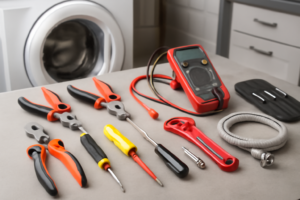
Tools & Parts Needed
Essential Tools
- Phillips #2 screwdriver
- ¼” nut driver
- Torx T20 screwdriver
- Multimeter
- Bucket and towels
Replacement Parts
- Drain pump
- coin trap/pump filter
- drain hose
- 5/16″ nut driver
- bucket
Step-by-Step Repair Instructions
Step 1
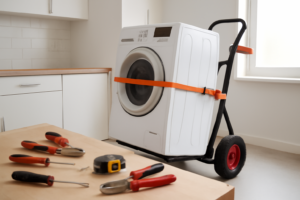
Unplug the washer before doing anything else — capacitors in the motor control board can hold a charge even after power is cut, so this protects you from shock. The drain pump sits at the bottom of the machine; reach it by either tipping the unit back at a 45-degree angle or removing the front access panel (two screws, bottom edge). Tipping is faster for most repairs, but have a helper hold the machine steady.
Step 2
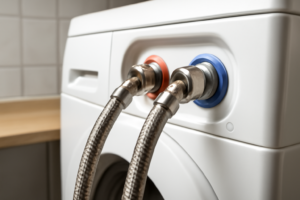
The coin trap filter at the pump inlet is the most common cause of slow draining — socks, coins, and debris collect here and restrict water flow to a trickle. Loosen the hose clamp with a 5/16-inch nut driver, pull the hose off the pump inlet, and clear out anything trapped inside. Have a shallow pan and towels ready because residual water in the tub will spill out when the hose comes free.
Step 3
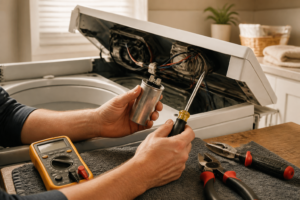
Testing the pump motor with a multimeter set to Rx1 tells you whether the motor windings are intact — an open reading (no continuity) means the motor has failed and the pump must be replaced. Even if the motor tests good, spin the impeller by hand; if it is seized or gritty, debris is jamming it mechanically, which slows drainage without triggering an error code. Clear any obstruction around the impeller before reassembling, or the new pump will fail for the same reason.
Step 4
Drain hose routing is a frequently overlooked cause of slow or incomplete draining — if the hose dips below 36 inches before reaching the standpipe, water siphons back into the tub during the cycle instead of fully evacuating. The hose must arch up to at least 36 inches high before it descends into the standpipe or drain connection. Use a zip tie or the included hose guide bracket to hold the arch in place; an unsecured hose can slip down over time and bring the slow-drain problem back.
Step 5
When installing the replacement pump, connect the wire harness first, then attach both inlet and outlet hoses and tighten the clamps firmly — a loose clamp is the leading cause of post-repair leaks. A small amount of seepage from the clamp area on the very first run is normal as gaskets seat themselves, but re-tighten immediately if it continues beyond that cycle. Pro tip: rotate the hose on the pump fitting before tightening the clamp so the clamp ear faces an accessible direction for any future service.
Step 6
Restore power and run a Drain and Spin cycle to verify the repair — a properly functioning pump on this model should empty a full tub in under two minutes. Watch and listen during the cycle: a healthy pump runs with a steady hum, while a failing or partially blocked pump will whine, cycle on and off, or leave standing water. If draining is still slow after confirming the pump, hose routing, and filter are all clear, suspect a partially blocked standpipe or a household drain restriction beyond the washer itself.
Where to Buy Replacement Parts
Find genuine OEM and aftermarket replacement parts for your Whirlpool WTW8120HW (Top Load) on Amazon:
- Whirlpool WTW8120HW drain pump W10876600 replacement
- Whirlpool top load washer pump filter cleaning
- Whirlpool washer drain hose installation kit
When to Call a Professional
If the issue persists after completing all steps above, the problem may involve the sealed refrigerant system, a failed main control board, or wiring that requires specialized diagnostic equipment. Contact a licensed appliance technician — attempting sealed-system repairs without EPA 608 certification is illegal and unsafe.
“`html
How Much Does This Repair Cost?
DIY parts for fixing a slow drain on your Whirlpool WTW8120HW typically run between $10–$75, depending on whether you need a new drain pump, hose, or lid switch. A professional service call usually costs $150–$300 once you factor in labor and parts. Tackling this repair yourself can save you $100 or more.
“`
## Frequently Asked Questions
Why is my Whirlpool WTW8120HW draining slowly but not completely stopping?
A partial blockage in the drain hose or a clogged pump filter is the most likely cause. Clean the filter and inspect the drain hose for kinks or debris buildup.
How do I access the drain pump filter on the WTW8120HW?
The drain pump filter is located behind the lower front panel. Remove the panel and twist the filter counterclockwise to release it.
Can a slow drain damage my Whirlpool top load washer over time?
Yes, ignoring a slow drain can strain the pump motor and cause premature failure. Addressing the issue promptly will extend your washer’s lifespan.