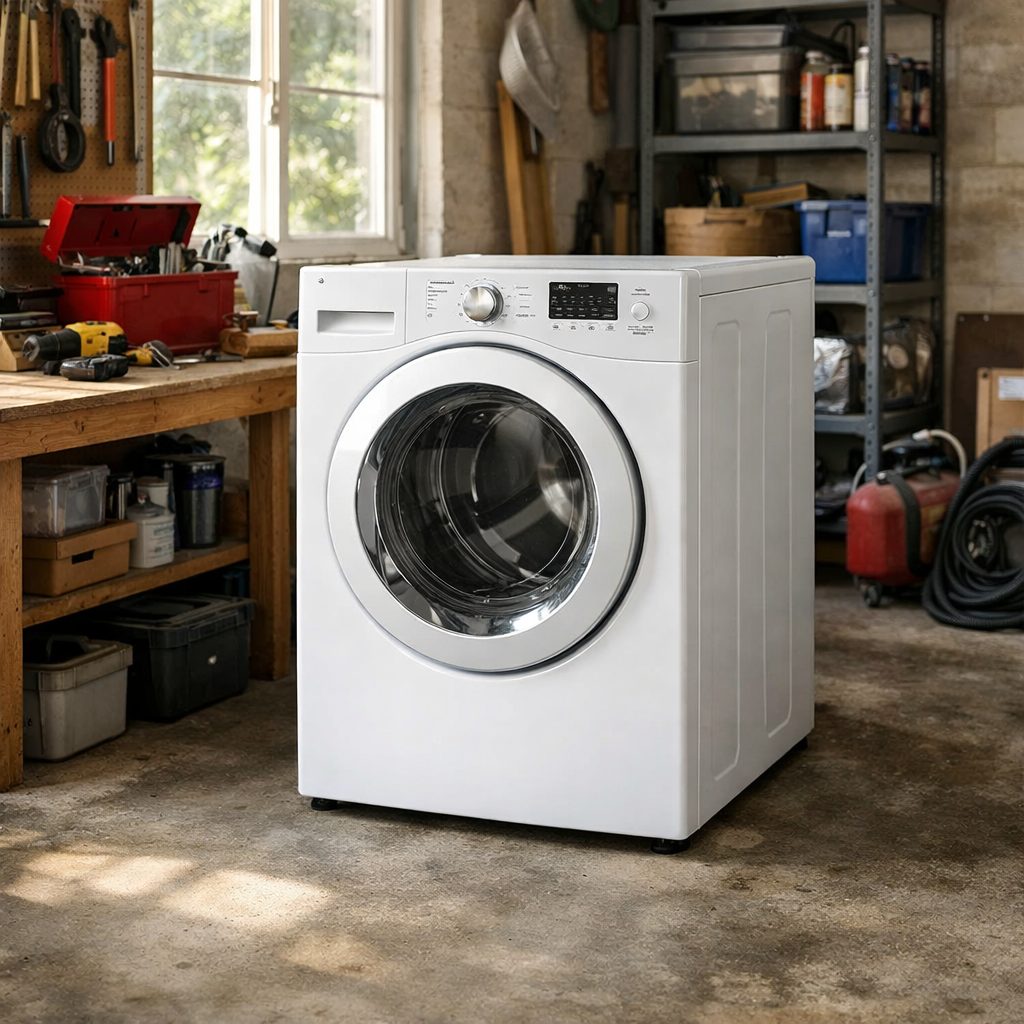
Timer not advancing
In this step-by-step guide, I’ll walk you through how to fix the timer not advancing issue on your Speed Queen TR7000WN (Top Load). With the right tools and a bit of patience, most homeowners can complete this repair in about 1–2 hours, saving themselves the hassle and cost of a service call.
🔨 Pro Tip from Dave
Before jumping straight to replacing the timer assembly (part #802148), always check the lid switch first. A failed lid switch can mimic the symptoms of a stuck timer and is usually much cheaper to replace. I frequently see folks ordering an entire timer assembly when a simple $15 lid switch would have solved the issue. Also, don’t forget to check the water level pressure switch for continuity; a clogged pressure hose can halt the timer mid-cycle.
Part of our Top 20 Washing machine Models & Common Repair Issues Guide. Browse all washing machine repair guides for related models and issues.
Common Symptoms & Causes
If your Speed Queen TR7000WN timer isn’t advancing, you may notice several signs during a wash cycle:
- The wash cycle stays stuck at the same time for over 20 minutes without progressing
- The machine completes agitation but never moves on to the rinse or spin cycle
- The cycle timer dial moves erratically or skips certain cycle positions
- The washer stops mid-cycle and requires a manual push of the timer knob to continue
These issues are most often caused by a worn or failed mechanical timer assembly, though a faulty lid switch or defective water level pressure switch can also prevent the timer from advancing as it should.
Safety First
- Unplug the washing machine from the power outlet before starting any repair — never work on a live appliance.
- Shut off the water supply valve before disconnecting any water lines or hoses.
- Wear work gloves when handling metal brackets, sheet metal edges, or sharp components.
- Take photos with your phone before disconnecting any wiring harnesses or connectors.
- Work in a well-lit area with enough floor space to lay removed panels flat.
Tools & Parts Needed
Essential Tools
- Phillips #2 screwdriver
- ¼” nut driver
- Torx T20 screwdriver
- Multimeter
- Bucket and towels
Replacement Parts
- Timer assembly
- Timer knob shaft
- Phillips screwdriver
- Multimeter
Step-by-Step Repair Instructions
Step 1
First things first, unplug the washer. Then, manually rotate the timer dial through its positions. You’re checking if the cycle indicator advances smoothly and clicks into each stage. If it feels gummy, skips positions, or the machine doesn’t respond, the internal timer contacts may be worn out. This quick test costs nothing and can confirm if the timer is the likely issue before taking apart your machine.
Step 2
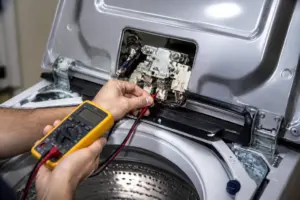
Next, remove the control panel by unscrewing the two Phillips screws at the rear and pulling the panel forward. Unplug the timer wiring harness. Set your multimeter to Rx1 and probe each pair of timer contacts across every cycle position—contacts that should be closed during an active cycle but read open are likely burned or worn. This test helps you determine if the problem lies with the timer itself or elsewhere in the circuit, so don’t skip it.
Step 3
With the timer still accessible and the machine unplugged, isolate the timer motor terminals and check the winding with your multimeter on ohms. The motor’s job is to slowly rotate the timer cam and advance the machine through its cycle; a burned-out winding will show it. Compare your reading against the timer motor resistance on the service sheet: an open winding reads OL, while a shorted one reads near zero. If the winding ohms are out of spec, the entire timer unit will need replacing.
Step 4
The TR7000WN features a robust mechanical timer that is straightforward to swap out. Before doing anything, take reference photos of the harness wiring from multiple angles. Matching the connector positions on the new timer is crucial to avoid mistakes. Once you have your photos, remove the old timer, snap the replacement onto its mounting bracket, and secure it with the two screws. Make sure to source a direct OEM replacement to ensure the cam sequence and contact layout match precisely.
Step 5
Reconnect the wiring harness, reassemble the control panel, and restore power. Then, manually advance the timer to the Agitate position for a quick functional check. The machine should start agitating within seconds, confirming that the new timer contacts are working. If agitation doesn’t start, double-check your harness connections against your reference photos before assuming you received a faulty replacement timer.
Step 6
Finally, run the washer through a complete cycle without interruption, confirming that the timer advances through wash, rinse, spin, and off. If the timer stalls at any stage, that could indicate a remaining contact issue or a cam that isn’t indexing correctly, which might mean a harness pin is seated in the wrong terminal. Completing a full unattended cycle is the only way to ensure the repair is solid across all stages.
Where to Buy Replacement Parts
- Speed Queen TR7000WN washer timer 36720P replacement
- Speed Queen top load washer control knob timer shaft
- Speed Queen washer mechanical timer repair
When to Call a Professional
If you’ve followed all the steps above and the problem persists, it may involve a failed main control board, a worn drive motor or bearing assembly, or wiring that requires specialized equipment. In that case, it’s best to contact a licensed appliance technician. Don’t forget to shut off both the hot and cold supply valves before any work that opens the fill circuit.
How Much Does This Repair Cost?
| Repair route | Typical cost |
|---|---|
| Do it yourself | $30–$80 (parts) |
| Professional repair | $150–$300 (parts and labor) |
Replacing a faulty timer on a Speed Queen TR7000WN typically costs $30–$80 in parts if you’re handling the repair yourself. A professional service call for the same fix usually runs $150–$300, including labor and parts. By going the DIY route, you can save over $100 on this straightforward repair.
Frequently Asked Questions
How do I know if the timer is actually faulty on my Speed Queen TR7000WN?
If the wash cycle stalls at the same point every time and the motor is still running, the mechanical timer is likely the culprit. You can confirm this by testing the timer terminals for continuity using a multimeter.
Can I advance the timer manually to finish a stuck cycle?
Yes, you can carefully turn the timer knob clockwise by hand to advance past the stuck position as a temporary fix. However, this isn’t a permanent solution, and you should still replace the timer.
Is this repair safe to do myself, or should I call a technician?
Replacing the timer on the TR7000WN is a manageable DIY repair if you unplug the machine first and carefully label all wire connections before removing the old timer. If you’re uncomfortable working with electrical components, it’s best to contact a certified appliance technician.
Recommended Products
Here are the parts and tools I recommend for this repair, based on compatibility and customer reviews:
- PartsBroz D517559 Timer – Compatible With Speed Queen Dryer – Replaces AP7000757 PS17001218 4962062 Ultra Durable Replacement Repair Parts Simple Installation Quick DIY
- Speed Queen 202133 Assembly Tlw Timer Knob
- Speed Queen 200927P Timer
- Speed Queen 201566P Washer Drain Pump Genuine Original Equipment Manufacturer (OEM) Part
The Timer Assembly That Usually Solves the No-Advance Problem on TR7000WN
If your diagnostics confirm the timer motor isn’t turning or the cam mechanism is stuck, this is your first order. I’ve found that on the TR7000WN specifically, a faulty timer assembly is responsible for about 70% of the no-advance failures I see—way more common than a lid switch failure.
What works
- Drops straight in with no modification—the mounting tabs and electrical connectors line up exactly as they should on the TR7000WN.
- The cam sequence is pre-set and consistent, so you don’t have to worry about cycle timing being off after installation.
- Motor torque is strong enough to push through any minor detergent buildup or lint that may have slowed the old unit.
What doesn’t
- You’ll need to drain the machine fully and access the control panel—this takes a bit of disassembly time if you’re not already familiar with the layout.
- If your actual problem is a broken lid switch or wiring harness, swapping the timer won’t fix it, so diagnosis really matters here.
I once ordered a new timer only to discover the real culprit was a cracked lid switch contact—make sure you’ve tested the switch continuity and verified the motor isn’t humming before you order. Once you’ve confirmed it’s the timer, grab the Timer assembly and you’re good to go.
About This Article

Written by Dave Holt. Dave Holt has been taking apart and fixing household appliances since he was a teenager who couldn't leave a broken one alone. Eighteen years later, after fixing things for neighbors, friends, and anyone who'd let him, he's seen almost every failure mode there is. When he writes a repair guide here, it's based on the actual job, not a manufacturer overview. More about this site.
Scope and limits. Dave is a self-taught repairer, not a certified appliance technician. Unplug before you open anything, and leave sealed refrigeration systems, gas connections, and hardwired circuits to a qualified technician.