Lower oven fan noise
In this guide, I’ll walk you through fixing the lower oven fan noise on your KitchenAid KOCE500ESS (Wall Oven + Microwave Combo). With the right tools and some patience, most homeowners can handle this repair in about 1–2 hours and save on a service call.
🔨 Pro Tip from Dave
On the KOCE500ESS, the lower oven convection fan motor (part number W10914660) is notorious for developing a grinding or rattling noise before complete failure — don’t just replace the blade and call it done, because nine times out of ten the motor bearings are already shot. A common mistake I see is folks skipping the thermal limiter check during reassembly; if that limiter tripped during the noise phase, your oven won’t heat properly even after the fan fix.
Part of our Top 20 Oven Models & Common Repair Issues Guide. Browse all oven repair guides for related models and issues.
Common Symptoms & Causes
If you’re hearing unusual fan noise from your KitchenAid KOCE500ESS lower oven, here are the most common signs to look for.
- A loud rattling or grinding noise coming from the lower oven cavity during baking or broiling
- The convection fan runs but produces a high-pitched squealing sound throughout the cook cycle
- Fan noise continues for several minutes after the oven has been turned off
- Vibration felt near the rear lower oven wall when the fan is running at full speed
These symptoms are typically caused by a worn convection fan motor, a damaged fan blade hitting the housing, or debris lodged near the fan assembly due to regular wear over time.
Safety First
- De-energize the combo unit at the breaker panel and lock or tag it out, then confirm the unit is dead with a contact voltage tester. There is no plug to pull on a hardwired built-in — never work on a live appliance.
- Wear work gloves when handling metal brackets, sheet metal edges, or sharp components.
- Take photos with your phone before disconnecting any wiring harnesses or connectors.
- Work in a well-lit area with enough floor space to lay removed panels flat.
Tools & Parts Needed
Essential Tools
- Phillips #2 screwdriver
- ¼” nut driver
- Multimeter
- Work gloves (heat-rated)
- Flashlight
Replacement Parts
- Convection fan motor
- fan blade
- Phillips screwdriver
- multimeter
Step-by-Step Repair Instructions
Step 1
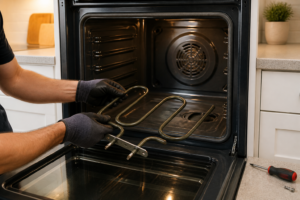
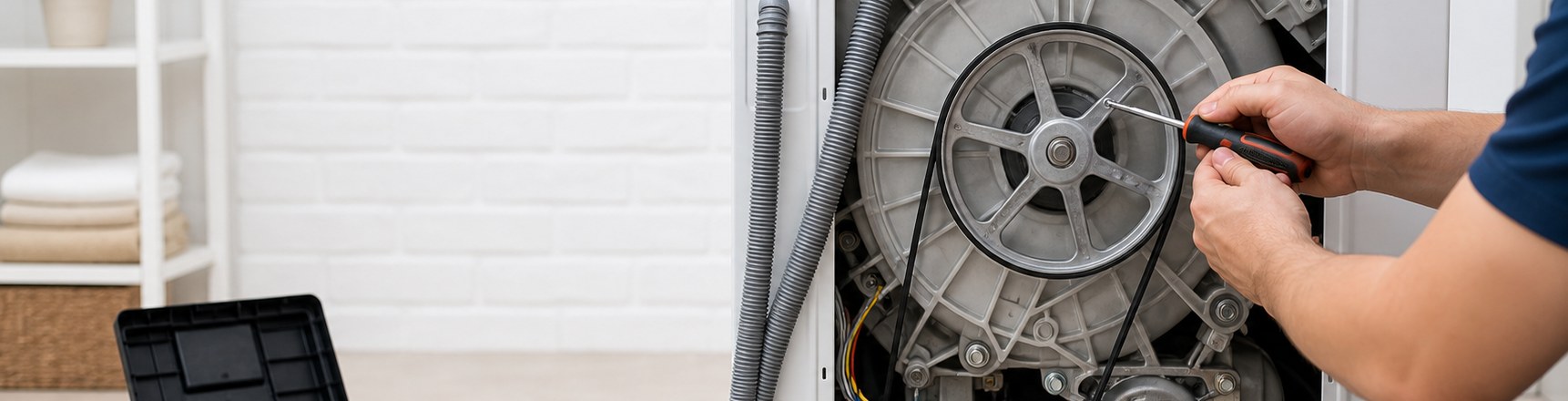
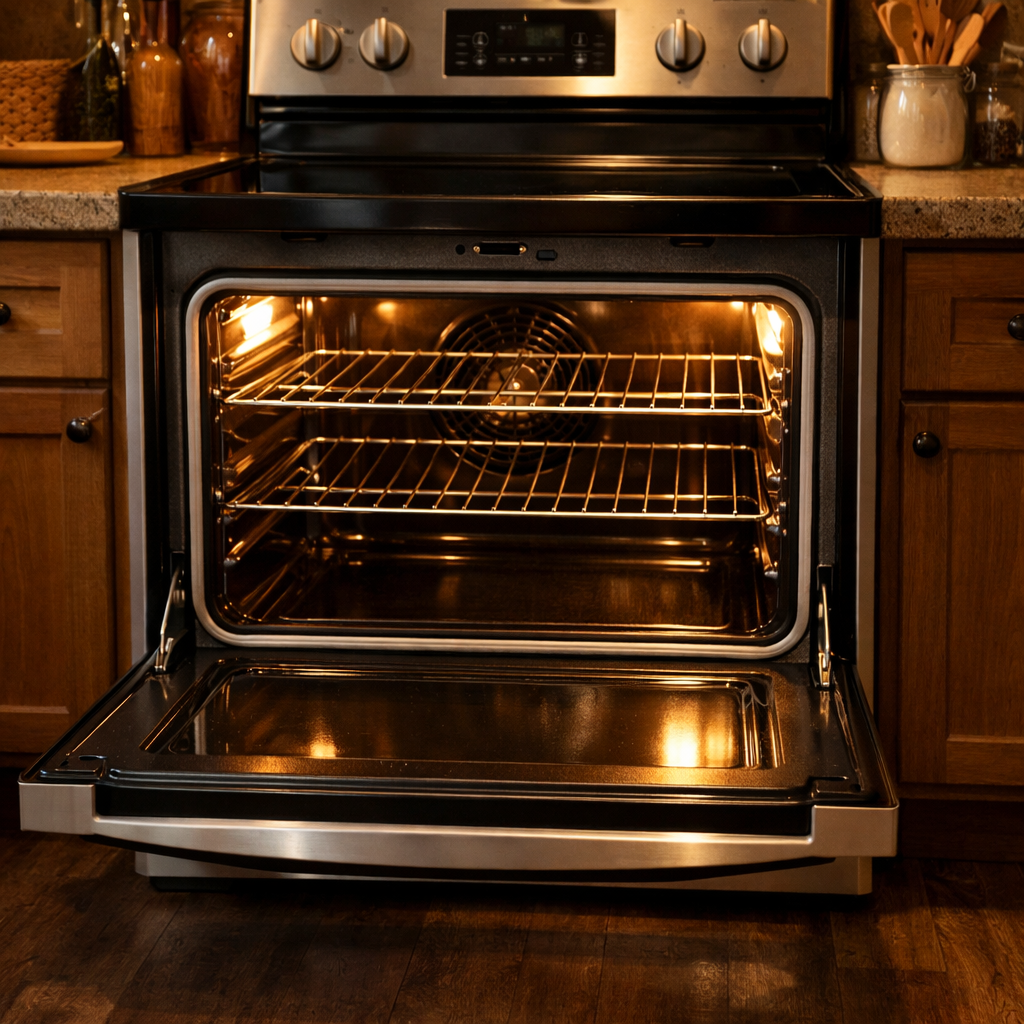
First off, disconnect power at the breaker before touching any components inside the oven — the fan motor runs on line voltage and contact can be fatal. With power off, remove the oven racks to give yourself clear access to the back wall, then unscrew the fan cover using a Phillips screwdriver (typically 1–2 screws at the center of the back wall). This exposes the fan blade, which is your starting point for diagnosing where the noise is coming from.
Step 2
Now, spin the fan blade by hand to get an immediate read on the problem: grinding resistance or a wobbling motion points to a worn motor bearing, while a blade that feels sticky or unbalanced usually has grease buildup affecting its rotation. If you find grease accumulation, clean the blade thoroughly with a kitchen degreaser before making any conclusions about the motor, since a dirty blade can mimic bearing failure. If it spins freely and true after cleaning, the motor might still be in good shape.
Step 3
Next, you’ll need to remove the oven’s back panel (four Phillips screws accessible from inside the oven cavity) to reach the motor and its wiring. Set your multimeter to Rx1 and probe the motor terminals — a reading of OL or open circuit indicates the motor windings have failed, and it’s time for a replacement. While the panel is off, double-check the blade for grease buildup on the hub or tips, which can create imbalance and is often an overlooked source of noise.
Step 4
Unplug the motor harness and remove the three Phillips screws securing the motor to the housing. Keep the old motor close for comparison when you orient the new one. Install the replacement motor and attach the fan blade so it pushes air toward the front of the oven cavity — reversing the blade direction will reduce circulation efficiency and lead to uneven baking. A pro tip: hand-tighten the blade nut first, then snug it firmly so it can’t work loose under vibration, but avoid overtightening, as this can crack the blade hub.
Step 5
Reinstall the back panel and fan cover, ensuring all screws are fully seated so no panel vibration adds noise after the repair. Double-check that the wiring harness is securely clicked into the motor connector, as a loose harness can lead to intermittent motor cutouts that mimic the original noise complaint. Restore power at the breaker only after confirming all panels are secured and there are no tools left inside the oven.
Step 6
Finally, run the oven in Convection Bake at 350°F for 20 minutes as your functional verification — the fan should operate silently throughout the cycle with no grinding, rattling, or intermittent noise. Ensure that baking results show even temperature distribution across all rack positions, which confirms the blade is correctly oriented and moving air properly. If noise returns or hot spots persist, recheck blade orientation and verify that the mounting screws on the motor haven’t loosened.
Where to Buy Replacement Parts
- KitchenAid KOCE500ESS lower oven convection fan motor replacement
- KitchenAid combo wall oven convection fan blade W10185282
- KitchenAid lower oven convection bearing noise repair
When to Call a Professional
If the issue persists after following all the steps outlined above, the problem may involve a failed main control board, a defective temperature sensor or high-limit thermostat, or wiring that requires specialized diagnostic equipment. In that case, it’s time to contact a licensed appliance technician. And remember, on gas models, don’t attempt work on the gas valve, burner orifices, or supply line — that’s best left to a licensed gas fitter in most jurisdictions.
How Much Does This Repair Cost?
| Repair route | Typical cost |
|---|---|
| Do it yourself | $20–$80 (parts) |
| Professional repair | $150–$300 (parts and labor) |
If you go the DIY route, replacement parts for the lower oven fan on the KitchenAid KOCE500ESS typically range from $20–$80, depending on whether you need the fan blade, motor, or both. A professional appliance repair service call usually runs $150–$300 once you factor in labor. Tackling this repair yourself can save you $100 or more.
Frequently Asked Questions
Is it safe to keep using my KitchenAid KOCE500ESS if the lower oven fan is making noise?
You can use it briefly, but continued operation risks further damage to the fan motor or bearings. Address the issue promptly to avoid a complete motor failure.
What typically causes fan noise in the KitchenAid KOCE500ESS lower oven?
Most commonly, worn fan bearings, a warped or loose fan blade, or debris caught in the fan assembly are the culprits. Inspecting these components first will save you time.
Do I need a technician to replace the lower oven fan, or can I do it myself?
If you feel confident, you can replace the fan by accessing the oven’s rear panel after disconnecting power. However, if you’re not familiar with appliance wiring, hiring a certified technician may be the safer choice.
Recommended Products
Here are the parts and tools I recommend for this repair, based on compatibility and customer reviews:
- Whirlpool WPW10245511 Genuine OEM Range Cooling Fan Assembly Replacement Part – Replaces W10245511
- [Upgraded 2026] W11107275 Range Control Panel Cooling Fan, Blower Motor for Whirlpool, KitchenAid, JennAir Range Oven – Replaces W10162259 W10780482 W10842388 W10860981 PS12347171 AP6278015 4546036
- Whirlpool W11248652 Genuine OEM Wall Oven Cooling Fan Assembly Replacement Part – Replaces W11109174, W10850518, and W11200129
The Convection Fan Motor That Stops the Grinding on Your KOCE500ESS Lower Oven
If you’re hearing a grinding, squealing, or rattling noise specifically from the lower oven cavity, the convection fan motor is almost always what needs replacing. This is the part that wears out fastest on this combo unit because it runs hot and cycles frequently on the lower oven.
What works
- OEM Whirlpool cooling fan assembly is a direct bolt-in replacement for the KOCE500ESS lower oven—no adapter plates or modification needed.
- The motor housing is pre-assembled, so you’re not dealing with separate blade, bearing, and motor components that need alignment—just pull the old one, slide the new one in, and reconnect two wires.
- Noise disappears immediately after installation; this part solves the actual problem instead of masking it, so it doesn’t come back.
What doesn’t
- It’s only compatible with Whirlpool/KitchenAid combo units in this generation—won’t work as a retrofit for older KOCE models or other brands’ double ovens.
- You still need to pull the entire unit out of the wall cavity to access it; if your kitchen layout is tight or the oven is hard-wired, this becomes a two-person job.
I’ve had homeowners order a generic fan blade thinking the noise was just wobble, only to discover the motor bearing itself was shot—the blade replacement didn’t touch the actual problem. Save yourself that frustration and order the complete OEM cooling fan assembly right away if you’re confident the noise is coming from the lower oven cavity.
About This Article

Written by Dave Holt. Dave Holt has been taking apart and fixing household appliances since he was a teenager who couldn't leave a broken one alone. Eighteen years later, after fixing things for neighbors, friends, and anyone who'd let him, he's seen almost every failure mode there is. When he writes a repair guide here, it's based on the actual job, not a manufacturer overview. More about this site.
Scope and limits. Dave is a self-taught repairer, not a certified appliance technician. Unplug before you open anything, and leave sealed refrigeration systems, gas connections, and hardwired circuits to a qualified technician.