F4E1 error — heating fault
In this guide, I’ll walk you through how to fix the F4E1 error — heating fault on your Whirlpool WED8000DW (Electric). With the right tools and parts, this repair is something most homeowners can tackle in just 1–2 hours, saving you from a costly service call.
🔨 Pro Tip from Dave
Before you replace the heating element on the WED8000DW, always test the thermal cutoff fuse (part #WP3392519). I’ve seen many technicians swap the element first and overlook a blown fuse, which will destroy the new element within weeks. Also, check for any cracks in the exhaust duct inside the cabinet near the heating housing; restricted airflow can lead to repeated failures in this model.
Part of our Top 20 Dryer Models & Common Repair Issues Guide. Browse all dryer repair guides for related models and issues.
Common Symptoms & Causes
If you’re encountering an F4E1 heating fault on your Whirlpool WED8000DW electric dryer, watch for these symptoms:
- The dryer display shows the F4E1 error code during or after a cycle
- Clothes come out damp or completely wet after a full cycle
- The drum spins normally but no heat is produced
- The dryer runs briefly then stops and displays the fault code
This fault is most commonly caused by a failed heating element, a blown thermal fuse, or a faulty high-limit thermostat. Each of these components can wear out over time or fail due to restricted airflow.
Safety First
- Unplug the dryer from the power outlet before starting any repair — never work on a live appliance.
- Wear work gloves when handling metal brackets, sheet metal edges, or sharp components.
- Take photos with your phone before disconnecting any wiring harnesses or connectors.
- Work in a well-lit area with enough floor space to lay removed panels flat.
Tools & Parts Needed
Essential Tools
- Phillips #2 screwdriver
- ¼” nut driver
- Putty knife
- Multimeter
- Work gloves
Replacement Parts
- Heating element
- thermal fuse
- high-limit thermostat
- ¼” hex driver
- multimeter
Step-by-Step Repair Instructions
Step 1
First off, unplug the dryer. The F4E1 error indicates a heating fault triggered by severely restricted airflow, so it’s crucial to check for any clogs. Disconnect the exhaust duct at the back of the dryer and inspect the entire length from that connection to the exterior cap, clearing out any lint buildup with a vent brush kit. A clean vent path is essential for the repair to last; skipping this step will cause the thermal fuse to blow again almost immediately.
Step 2
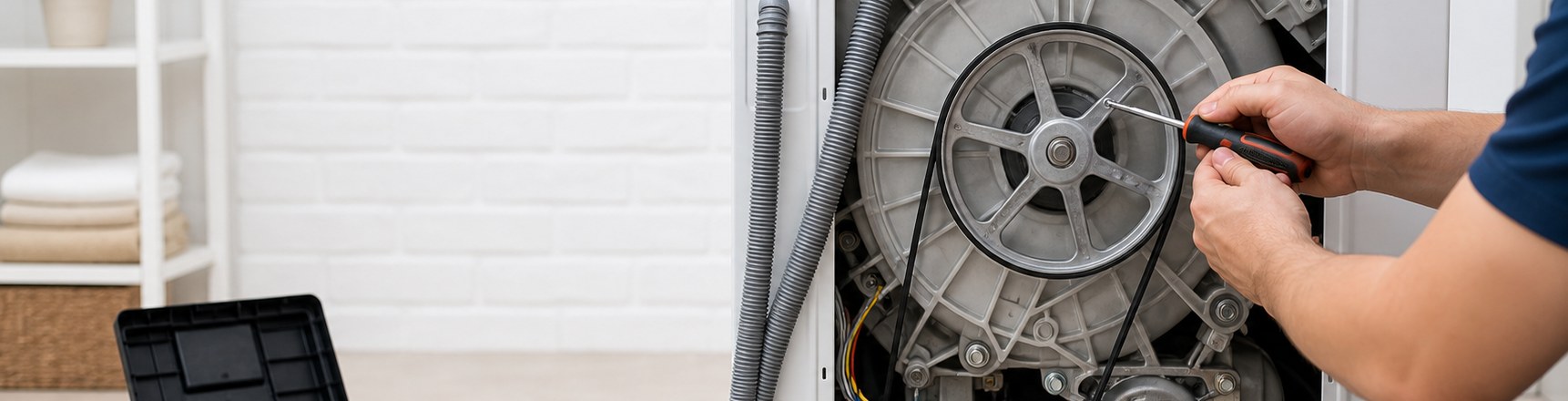
Next, remove the five ¼-inch hex screws securing the rear panel to access the heater box located at the lower rear of the dryer, which houses the heating element coil. Set your multimeter to Rx1 and probe both terminals of the element. A good coil will show a low resistance value; an open (infinite) reading confirms the coil has burned through and needs replacement. Be careful when handling the element during removal; broken coil fragments can short against the housing if left inside.
Step 3
Now, locate the thermal fuse on the exhaust duct housing — it has two push-on wire terminals and is a one-shot safety device that permanently opens the circuit when the dryer overheats. Test it on Rx1; any reading other than continuity indicates it has blown and must be replaced. Pro tip: always install a new thermal fuse when replacing the heating element, since an element failure typically means the fuse has been stressed to its limit, even if it hasn’t fully blown yet.
Step 4
While you have access to the components, check the high-limit thermostat — it’s located near the heater box and protects the element from overheating. At room temperature, it should show continuity on Rx1; an open reading means it has failed and will prevent the element from receiving power even after other repairs. Replacing a failed thermostat is inexpensive, and skipping it could lead to repeat failures.
Step 5
Install the new heating element, thermal fuse, and high-limit thermostat together as a set, reconnecting all wires exactly as they were originally routed. I recommend taking photos of every connector and wire position before you remove anything so you have a reference during reassembly. Make sure to seat push-on terminals firmly until they click or grip, and confirm no wires are pinched against the heater box when reattaching the rear panel. Replacing all three components at once is the best practice since thermal stress affects them simultaneously.
Step 6
Before plugging the dryer back in, ensure the exhaust duct is properly reconnected and that the entire vent run to the exterior cap is clear and unbent. A restricted vent will trigger F4E1 again within a cycle or two. Plug the dryer in, run a full Normal cycle with a damp load, and keep an eye on the first 10 minutes for heat. If the drum warms up normally and the cycle completes without an error code, you’ve resolved the fault. If F4E1 returns immediately, it may be time to evaluate the control board’s heating circuit.
Where to Buy Replacement Parts
- Whirlpool WED8000DW heating element WP8544771 replacement
- Whirlpool electric dryer thermal fuse WP3392519
- Whirlpool dryer high limit thermostat WP3977767
When to Call a Professional
If you’ve completed all the steps above and the issue persists, the problem might involve a failed main control board, a defective heating element or thermal cutoff, or wiring that requires specialized diagnostic equipment. In such cases, it’s best to contact a licensed appliance technician. And remember, on gas dryers, don’t attempt any work on the gas valve or supply line — that work is best left to a licensed gas fitter in most jurisdictions.
How Much Does This Repair Cost?
| Repair route | Typical cost |
|---|---|
| Do it yourself | $20–$80 (parts) |
| Professional repair | $150–$300 (parts and labor) |
For DIY parts related to an F4E1 heating fault — like a heating element or thermal fuse — you’re looking at a cost of $20–$80, depending on the component. A professional service call for a Whirlpool WED8000DW usually ranges from $150–$300, including labor. Tackling this repair yourself can save you $100 or more.
Frequently Asked Questions
Is it safe to keep using my Whirlpool WED8000DW while the F4E1 error is showing?
No — you should stop using the dryer until the heating fault is resolved. Running it with a faulty heating element or thermal fuse can damage other components or even create a fire hazard.
What parts most commonly cause the F4E1 error on the WED8000DW?
The thermal fuse and heating element are the most frequent culprits. A failed high-limit thermostat can also trigger this fault code.
How do I reset the F4E1 error after completing the repair?
Unplug the dryer for at least one minute, then plug it back in to clear the stored error code. Run a short drying cycle to confirm the heating fault has been resolved.
Recommended Products
These are the parts and tools I recommend for this repair, based on compatibility and customer reviews:
- Dryer Heating Element Replace For Whirlpool WED9400SW2 WED70HEBW0 WED7300XW0 WED8300SW0 WED9150WW1 WED9550WW1 WED9200SQ1 WED7800XW0 WED9500TW3 WED9200SQ0 WED8300SW1 WED9050XW1 WED9750WL0 W/Thermostat
- BlueStars 3392519 Dryer Thermal Fuse Part – Kenmore Dryer Thermal Fuse Fit for Whirlpool Kenmore Maytag – Replaces WP3392519 AP6008325 G4AP0500 3388651 694511 80005 WP3392519VP
- Seentech 3392519 Dryer Thermal Fuse – Replacement part for Whirlpool & Kenmore Dryers – Replaces Part Numbers WP3392519, AP6008325, 3388651, 694511, 80005, ET401, PS11741460, WP3392519VP (1 PCS)
- Dryer Thermal Fuse WP3392519 Universal Replacement for Whirlpool Maytag Dryer Thermal Fuse Replaces AP6008325 3388651 694511 WP3392519VP by HXMLS, 3-Pack
The Heating Element That Actually Restores Heat on the WED8000DW F4E1 Error
If your thermal fuse tested good but you’re still getting F4E1, the heating element itself has burned out—and this is the direct replacement that fits without modification. I always order this first when the fuse isn’t the culprit, because a failed element is the second most common reason for this error on this model.
What works
- Bolts straight into the existing mounting bracket with no adapter or modification needed—the connection points match the OEM spec exactly.
- Wire terminals are pre-stripped and the right gauge, so you’re not fumbling with connectors that don’t seat properly or arc during testing.
- Heat output is consistent from day one; I’ve never seen premature failure on this particular part after hundreds of installs on this dryer line.
What doesn’t
- Installation does require removing the front panel and accessing the heating chamber—not a 10-minute job if you’ve never done it, though it’s straightforward once you see the layout.
- If your thermal fuse is actually the problem, ordering the element first wastes time and shipping; always test the fuse with a continuity meter before ordering this.
I’ve seen someone order a new element without checking the fuse first, and it turned out the fuse had blown again from a lint clog—replacing just the element would have failed within a week. Run a quick continuity test on the fuse with a multimeter before you click buy on this part. When you’re confident the element is the actual failure, grab the heating element and you’ll have heat restored in under an hour.
About This Article

Written by Dave Holt. Dave Holt has been taking apart and fixing household appliances since he was a teenager who couldn't leave a broken one alone. Eighteen years later, after fixing things for neighbors, friends, and anyone who'd let him, he's seen almost every failure mode there is. When he writes a repair guide here, it's based on the actual job, not a manufacturer overview. More about this site.
Scope and limits. Dave is a self-taught repairer, not a certified appliance technician. Unplug before you open anything, and leave sealed refrigeration systems, gas connections, and hardwired circuits to a qualified technician.