Exhaust Restriction Diagnosis
This step-by-step repair guide is designed to help you fix the exhaust restriction diagnosis on your Whirlpool WED8000DW (Electric). With the right tools and parts, you can complete this repair in 1–2 hours and save yourself a costly service call.
🔨 Pro Tip from Dave
On the WED8000DW, many people overlook the secondary lint trap channel inside the duct housing just behind the drum — lint compacts there and often won’t show up with a simple visual check. Before you assume the blower wheel (part number W10661045) is the problem, pull out the drum and give that channel a thorough cleaning. Also, check the blower wheel fins for any wrapped fabric, as this can choke airflow and mimic a fully blocked duct.
Part of our Top 20 Dryer Models & Common Repair Issues Guide. Browse all dryer repair guides for related models and issues.
Common Symptoms & Causes
If your Whirlpool WED8000DW exhibits the following symptoms, it likely points to an exhaust restriction issue that requires immediate attention.
- Clothes are still damp after a full drying cycle completes
- The dryer runs but produces little to no heat output
- A burning smell or excessive heat buildup around the dryer cabinet
- Drying cycles take significantly longer than the estimated time displayed
These problems are typically caused by a clogged lint screen, a kinked or blocked exhaust duct, or years of lint accumulation that restrict proper airflow through the venting system.
Safety First
- Unplug the dryer from the power outlet before starting any repair — never work on a live appliance.
- Wear work gloves when handling metal brackets, sheet metal edges, or sharp components.
- Take photos with your phone before disconnecting any wiring harnesses or connectors.
- Work in a well-lit area with enough floor space to lay removed panels flat.
Tools & Parts Needed
Essential Tools
- Phillips #2 screwdriver
- ¼” nut driver
- Putty knife
- Multimeter
- Work gloves
Replacement Parts
- Dryer vent brush kit (12 ft flexible)
- leaf blower adapter
- exterior vent cap inspection
Step-by-Step Repair Instructions
Step 1
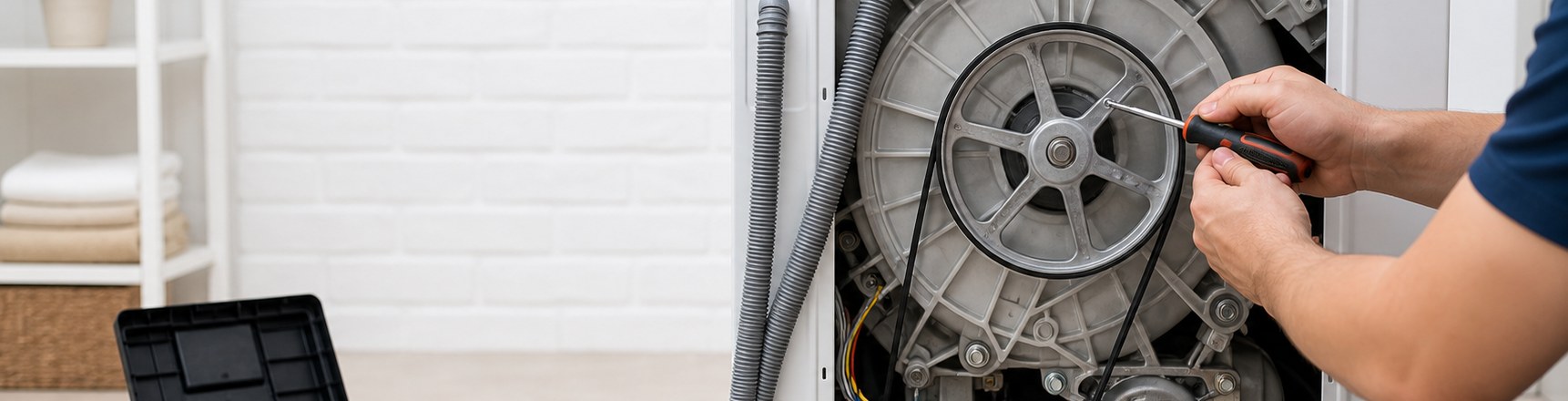
First things first: unplug the dryer before you start, then disconnect the vent hose at the back by loosening the hose clamp with a 5/16″ nut driver. Working on a live dryer is risky and can lead to electric shock or the blower running unexpectedly. Once the hose is off, spin the drum by hand and check the dryer’s exhaust port; you should feel a strong rush of air. This confirms that the blower wheel is functioning and that the restriction lies within the duct, not in the machine itself. If airflow feels weak at the dryer port, the issue could be a failed blower wheel or a clogged lint trap housing.
Step 2
Next, use a flexible vent brush to clean out the duct from the dryer end, working it through the duct in sections and pulling out any accumulated lint. Lint buildup is the most common cause of exhaust restriction and can significantly increase drying time and fire hazards. Withdraw the brush slowly to avoid pushing loosened lint deeper into the duct. Pro tip: lay a drop cloth under the duct opening, as years of compacted lint can fall out in large clumps.
Step 3
Don’t forget to brush from the exterior cap inward, as that’s where lint tends to accumulate most heavily. Remove the exterior vent cap (usually held on by two Phillips screws) and brush from outside to clear the cap screen and the first few feet of duct. A clogged or bird-nested exterior cap can single-handedly cause overheating and trip the thermal fuse. Ensure the cap damper flap swings freely after cleaning; a stuck flap can act like a nearly total blockage.
Step 4
While you have the system apart, inspect the duct material as well. If you find flexible plastic accordion duct, consider replacing it with smooth rigid metal duct. The ridged interior of plastic duct traps lint at every ridge, and over time, it can sag, creating low spots where lint accumulates and airflow stalls. Plastic duct also poses a greater fire hazard due to its potential to ignite from lint buildup. Use 4-inch diameter rigid aluminum or galvanized steel duct with foil-tape sealed joints. Avoid sheet-metal screws inside the duct since their protruding tips can catch lint.
Step 5
Now, measure the total duct run and calculate equivalent length. Add 5 feet for every 90-degree elbow, as each bend creates turbulence and backpressure that the blower must overcome. Most dryers, including this Whirlpool model, are rated for a maximum of 25 feet of equivalent run. If you exceed that limit, the blower cannot maintain adequate exhaust velocity, causing moisture and lint to accumulate. If your setup demands a longer run, install an inline duct booster fan rated for dryer exhaust to maintain proper airflow.
Step 6
Reconnect the duct to the dryer’s exhaust port using a smooth metal hose clamp tightened with a 5/16″ nut driver. Make sure the connection is airtight to prevent hot, moist air from leaking into the wall cavity or laundry space. Run the dryer on a timed heat cycle for 15 minutes, then go outside and hold your hand six inches from the exterior cap; you should feel a strong, steady blast of warm air, indicating unrestricted flow. If airflow is still weak after cleaning and properly sizing the duct, check the blower wheel for any lint wrapping or a failed bearing.
Where to Buy Replacement Parts
- dryer vent cleaning brush kit 12 foot flexible
- Whirlpool dryer exhaust duct restriction diagnostic
- dryer booster fan vent long run installation
When to Call a Professional
If the issue persists after following all these steps, you may be dealing with a failed main control board, a defective heating element or thermal cutoff, or wiring that requires specialized diagnostic equipment. In such cases, it’s best to contact a licensed appliance technician. For gas dryers, never attempt work on the gas valve or supply line; that should be left to a licensed gas fitter in most jurisdictions.
How Much Does This Repair Cost?
| Repair route | Typical cost |
|---|---|
| Do it yourself | $5–$50 (parts) |
| Professional repair | $150–$300 (parts and labor) |
DIY parts for an exhaust restriction repair on the Whirlpool WED8000DW typically run $5–$50, covering replacement vent hoses, clamps, or duct components. A professional service call for the same diagnosis and repair usually costs $150–$300 in labor fees. Tackling this yourself can save you $100–$250 or more, making it a worthwhile DIY project.
Frequently Asked Questions
How do I know if my Whirlpool WED8000DW has an exhaust restriction?
Look for common signs like clothes taking much longer than usual to dry, the dryer feeling excessively hot, or the unit shutting off before the cycle completes. Begin by checking your exhaust vent for any visible blockages or crushed ducting.
Can I clean the exhaust duct myself without a professional?
Absolutely, most homeowners can clear lint buildup using a dryer vent cleaning brush kit found at hardware stores. Just remember to disconnect the dryer from power before detaching and inspecting the ductwork.
What type of exhaust duct is recommended for the WED8000DW?
For optimal airflow and safety, Whirlpool recommends using rigid metal or semi-rigid metal ducting. Avoid plastic or foil accordion-style ducts, as they can restrict airflow and pose a fire hazard.
Recommended Products
Here are the parts and tools I recommend for this repair, based on compatibility and customer reviews:
- WP697772 697772 Dryer Blower Wheel Compatible
- New WP697772 697772 Dryer Blower Wheel Replacement for Whirlpool Maytag Kenmore W10349492 AP6010627 PS11743811 687613 PS384381 W10211915 W10874014
- PartsBroz Blower Wheel for Whirlpool WED5010LW1 Dryer Blower Wheel Replacement
- 279973 & 3392519 & 8577274 Dryer Thermal Cut-Off Fuse Kit with Thermistor Control and Thermal Fuse by Blutoget -Compatible for Whirlpool, Kenmore, Samsung, Maytag electric Dryers
The Brush Kit That Actually Clears WED8000DW Exhaust Blockages Without Tearing Into the Housing
Before you start pulling apart the lint trap housing or disconnecting the exhaust duct from the back of the dryer, a proper vent brush will catch most restrictions and save you hours of disassembly. I always run this first—it’s the fastest way to confirm whether you’re dealing with a simple lint buildup or something more serious like a kinked duct or failed blower wheel.
What works
- The flexible design snakes through the typical 4-inch exhaust ducting on this model without forcing or crimping the duct walls.
- Packed lint comes out in visible clumps—you can actually see the blockage you’re removing, which confirms the restriction diagnosis.
- 12 feet is long enough to reach from the dryer to the exterior vent cap without needing to disconnect the entire run.
What doesn’t
- Won’t work if the duct is severely kinked or crushed—you need a clear path for the brush to move through, or you’ll get stuck halfway.
- If the blower wheel itself is failing, clearing lint alone won’t fix the real problem; the dryer will still run hot and shut off on the thermal fuse.
I’ve seen people buy a new thermal fuse first only to discover that the exhaust was entirely blocked with lint—the part wasn’t faulty; it was the airflow that was the issue. Grab a Dryer vent brush kit (12 ft flexible) and clear the duct before ordering replacement parts.
About This Article

Written by Dave Holt. Dave Holt has been taking apart and fixing household appliances since he was a teenager who couldn't leave a broken one alone. Eighteen years later, after fixing things for neighbors, friends, and anyone who'd let him, he's seen almost every failure mode there is. When he writes a repair guide here, it's based on the actual job, not a manufacturer overview. More about this site.
Scope and limits. Dave is a self-taught repairer, not a certified appliance technician. Unplug before you open anything, and leave sealed refrigeration systems, gas connections, and hardwired circuits to a qualified technician.