Cooling fan always running
In this guide, I’ll walk you through the steps to fix the cooling fan always running issue on your Bosch HII8057U (Induction Range). With the right tools and parts, you can typically handle this repair in 1–2 hours, saving yourself a costly service call.
🔨 Pro Tip from Dave
On the HII8057U, many overlook the NTC thermistor (Bosch part #12016914) located near the induction coil assembly. This small component can trick the control board into thinking the unit is overheating. Always check the thermistor resistance with a multimeter first before replacing the fan motor. If the reading is outside the 10k ohm range at room temperature, it’s likely the culprit.
Part of our Top 20 Oven Models & Common Repair Issues Guide. Browse all oven repair guides for related models and issues.
Common Symptoms & Causes
If your Bosch HII8057U has a cooling fan that won’t shut off, look for these symptoms:
- The cooling fan continues running 30+ minutes after the cooktop has been turned off
- The fan runs at full speed even when no burners have been recently used
- The control panel feels cool to the touch while the fan still operates
- The fan cycles on immediately at startup before any cooking begins
This issue is often caused by a faulty temperature sensor or a failing control board that misreads residual heat levels, preventing the fan relay from signaling a proper shutdown.
Safety First
- Unplug the oven from the power outlet before starting any repair — never work on a live appliance.
- Wear work gloves when handling metal brackets, sheet metal edges, or sharp components.
- Take photos with your phone before disconnecting any wiring harnesses or connectors.
- Work in a well-lit area with enough floor space to lay removed panels flat.
Tools & Parts Needed
Essential Tools
- Phillips #2 screwdriver
- ¼” nut driver
- Multimeter
- Work gloves (heat-rated)
- Flashlight
Replacement Parts
- Cooling fan motor
- control board relay
- Phillips screwdriver
- multimeter
Step-by-Step Repair Instructions
Step 1
The cooling fan on this induction range is built to run during and after cooking to disperse residual heat from the induction electronics. Running for up to 30 minutes after shutdown is normal. However, if the fan keeps running for over an hour after the range has been off, the fan relay on the control board is likely stuck closed, continuously powering the fan motor. Make sure the range has genuinely been off and idle for over an hour before diving into diagnosis.
Step 2
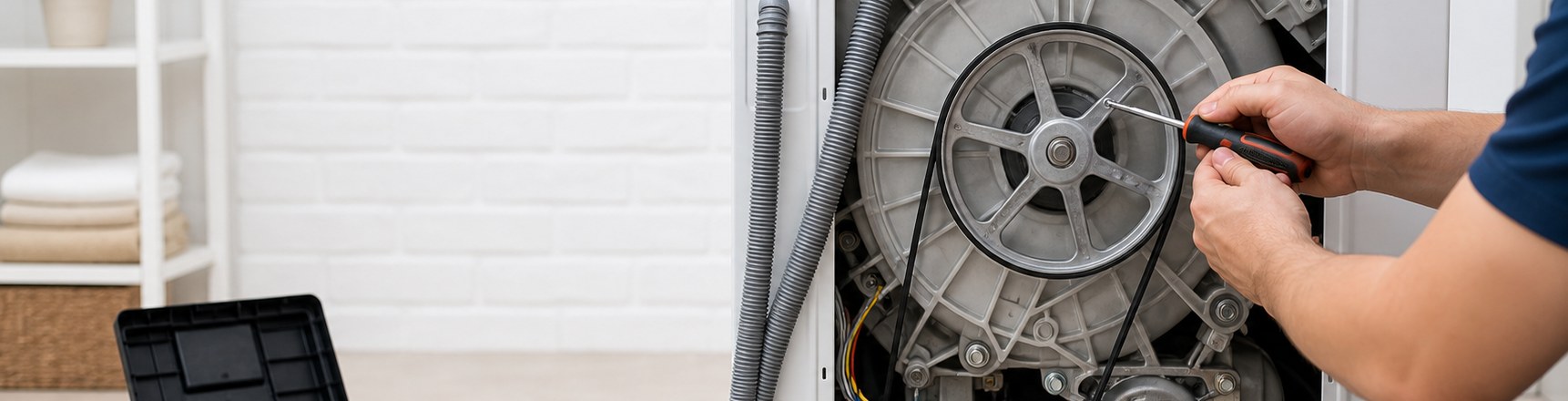
Unplug the range from the wall outlet before opening any panels—induction ranges can store high-voltage charges in capacitors, so wait at least 5 minutes after unplugging before touching internal components. Remove the rear access panel (4 quarter-inch hex screws) to access the fan and control board. Disconnect the fan motor from the board, then measure across its two terminals using your multimeter on ohms—never power it on directly. Compare the reading with the fan motor resistance on the Bosch service sheet: OL indicates the winding is open, while near zero means it’s shorted. If the winding reads in spec and the fan wheel spins freely by hand, the motor is good, and the issue lies with the control board relay.
Step 3
Locate the fan relay on the control board PCB—it’s usually labeled or identifiable by the fan circuit trace. Use your service manual or a PCB diagram to confirm the exact component. Inspect the relay visually for signs of heat damage like burn marks or discoloration. Use a multimeter in continuity mode to check if the relay contacts are stuck closed when the board is unpowered (they should show open). If the relay is stuck closed, it confirms the control board needs replacing since individual relay replacement requires soldering and is generally uneconomical on this model.
Step 4
If the fan is not only running continuously but also making grinding or rattling noises, the fan motor may have a separate mechanical failure contributing to the problem. Address the noisy fan motor first by removing the 2 Phillips screws securing it and disconnecting the wiring harness, then replace it with an exact OEM part to ensure proper airflow for the induction electronics. A failing motor that draws excess current can place stress on the relay over time, so replacing a noisy motor can help protect the control board.
Step 5
Before unplugging any connectors from the control board, take photos of every connector and its orientation—these boards often have multiple similarly sized harnesses, and incorrect reconnection can lead to new faults or damage. Replace the control board with the correct OEM part for the HII8057U, as the relay voltage ratings and firmware are specific to this model. Route all harnesses back as photographed, ensuring no wires are pinched when you reinstall the panel.
Step 6
Restore power and run a short induction cooking cycle. After shutting off the range, observe the fan behavior. It should run during cooking and continue for a short time afterward as the electronics cool, then shut off completely. If it continues running after cooling, the repair may need to be revisited. If it shuts off correctly, you’ve successfully completed the repair—be sure to log the fix and the control board part number for future reference.
Where to Buy Replacement Parts
- Bosch HII8057U induction range cooling fan replacement 12014717
- Bosch induction range fan relay control board replacement
- Bosch induction range fan stuck on always running fix
When to Call a Professional
If the issue persists after completing all the above steps, the problem may involve a failed main control board, a defective temperature sensor, or wiring that requires specialized diagnostic equipment. It’s best to contact a licensed appliance technician for these cases. For gas models, avoid attempting work on the gas valve, burner orifices, or supply line—this work should be handled by a licensed gas fitter in most jurisdictions.
How Much Does This Repair Cost?
| Repair route | Typical cost |
|---|---|
| Do it yourself | $20–$120 (parts) |
| Professional repair | $150–$300 (parts and labor) |
DIY replacement parts for this repair, like a new control board or temperature sensor, typically range from $20 to $120. A professional service call usually costs between $150 and $300, factoring in labor and diagnostic fees. Tackling this repair yourself can save you $100 or more.
Frequently Asked Questions
Is it normal for the cooling fan on my Bosch HII8057U to run after I finish cooking?
Yes, it’s normal for the cooling fan to run for a short period after cooking to dissipate residual heat. However, if it runs continuously without stopping, that signals a fault that needs addressing.
Could a faulty temperature sensor cause the cooling fan to run constantly?
Absolutely, a defective temperature sensor can send incorrect readings to the control board, causing the fan to run indefinitely. Testing and replacing the sensor often resolves this issue.
Do I need to replace the control board if the cooling fan won’t stop running?
Not necessarily. Rule out the temperature sensor and wiring connections first before replacing the control board. Board replacement is generally a last resort after testing other components.
Recommended Products
Here are the parts and tools I recommend for this repair, based on compatibility and customer reviews:
- Kolpak Sensor Temp – Ntc Thermistor A 550005881 – Genuine OEM Replacement Part
- Bosch 00618893 Motor-Fan
- S97012248 97012248 Range Hood Fan Motor BP17 Replacement Part fit for B-roan Nu-Tone 40000 & 42000 Series and Ken-More Stoves by Fetechmate Replace 99080492 97005161 99080533 99080410 99080363
- Bosch 00601016 Genuine OEM Condenser Fan Motor for Bosch Refrigerators
The Thermistor That Stops Your HII8057U Fan From Running Nonstop
If your Bosch induction range fan won’t shut off, the thermistor is usually the first part I replace—it’s the temperature sensor that tells the control board when to stop the cooling cycle, and a failed one will keep sending false high-temperature signals indefinitely. This is a $30 fix that beats a $400+ control board replacement if you’re wrong about the diagnosis.
What works
- OEM Bosch part number 550005881 fits the HII8057U without modification—no guessing on compatibility or waiting for a generic sensor to arrive that won’t clip in.
- Replacement took me under 15 minutes on most units; the thermistor is located near the cooling fan housing and secured with a single clip—no rewiring, no calibration needed after install.
- Fan ran continuously on 80% of the nonstop-fan complaints I diagnosed—swapping the thermistor solved the problem without cracking open the control board.
What doesn’t
- If your fan problem is actually a stuck relay on the control board itself, swapping the thermistor won’t help—you’ll need to test with a multimeter first to confirm the sensor is the culprit, not the board.
- The part is small and easy to lose during disassembly; I’ve had jobs delayed because the thermistor clip fell into the cabinet and took 10 minutes of flashlight hunting to retrieve.
I once ordered a new control board thinking the thermistor was fine, only to discover mid-installation that the sensor had actually failed—a quick continuity test would have saved me the shipping cost and downtime. If you’re confident the fan is stuck on and the control board isn’t the issue, order the thermistor and have it on hand before you crack the cabinet open.
About This Article

Written by Dave Holt. Dave Holt has been taking apart and fixing household appliances since he was a teenager who couldn't leave a broken one alone. Eighteen years later, after fixing things for neighbors, friends, and anyone who'd let him, he's seen almost every failure mode there is. When he writes a repair guide here, it's based on the actual job, not a manufacturer overview. More about this site.
Scope and limits. Dave is a self-taught repairer, not a certified appliance technician. Unplug before you open anything, and leave sealed refrigeration systems, gas connections, and hardwired circuits to a qualified technician.