Convection fan noise
In this step-by-step repair guide, I’ll walk you through fixing convection fan noise on your GE Profile PB960SJSS (Electric Range). With the right tools and parts, most homeowners can complete this repair in 1–2 hours and avoid a costly service call.
🔨 Pro Tip from Dave
On the PB960SJSS, the convection fan motor (WB26X10051) is notorious for developing a high-pitched whine before it fully fails — don’t just replace the blade and call it done. A common mistake I see is forgetting to check the fan blade for grease buildup and warping first, since a contaminated blade can mimic motor noise. Also, the rear panel screws on this model strip easily, so use a proper #2 Phillips and don’t overtorque them.
Part of our Top 20 Oven Models & Common Repair Issues Guide. Browse all oven repair guides for related models and issues.
Common Symptoms & Causes
These symptoms typically point to a convection fan issue on your GE Profile PB960SJSS electric range.
- A loud rattling or grinding noise coming from the back of the oven during convection baking
- A high-pitched squealing sound that increases as the oven heats up
- The convection fan blade visibly wobbles or scrapes against the fan housing
- Uneven baking results accompanied by an intermittent thumping noise during operation
These issues are most commonly caused by worn convection fan motor bearings, a damaged or bent fan blade, or debris lodged inside the fan housing from normal wear over time.
Safety First
- Unplug the oven from the power outlet before starting any repair — never work on a live appliance.
- Wear work gloves when handling metal brackets, sheet metal edges, or sharp components.
- Take photos with your phone before disconnecting any wiring harnesses or connectors.
- Work in a well-lit area with enough floor space to lay removed panels flat.
Tools & Parts Needed
Essential Tools
- Phillips #2 screwdriver
- ¼” nut driver
- Multimeter
- Work gloves (heat-rated)
- Flashlight
Replacement Parts
- Convection fan motor
- fan blade
- Phillips screwdriver
- multimeter
Step-by-Step Repair Instructions
Step 1
First off, unplug the range and remove the oven racks to give yourself clear access to the rear interior wall. Remove the 1–2 Phillips screws at the center of the convection fan cover and pull it off so you can inspect the fan blade directly — you’re looking for caked grease or physical damage, both of which can cause noise. Safety first: never work on the fan with the range plugged in, as the convection motor can start automatically during a bake cycle.
Step 2
With the blade exposed, apply a kitchen degreaser and scrub off any buildup, then dry thoroughly before reassembling. Grease accumulates unevenly on the blades over time, creating an imbalance that causes the fan to wobble and produce a humming or rattling sound — this is the root cause in roughly 40% of convection fan noise complaints. This is the cheapest and fastest fix to rule out before suspecting a hardware failure.
Step 3
If the blade is clean but noise continues, manually spin the fan blade by hand with the cover still off and the range unplugged. You’re feeling for grinding, stiff resistance, or visible wobble, all of which indicate worn or failed motor bearings — a bearing failure won’t resolve with cleaning and requires motor replacement. A healthy motor bearing will spin freely and smoothly with no lateral play in the shaft.
Step 4
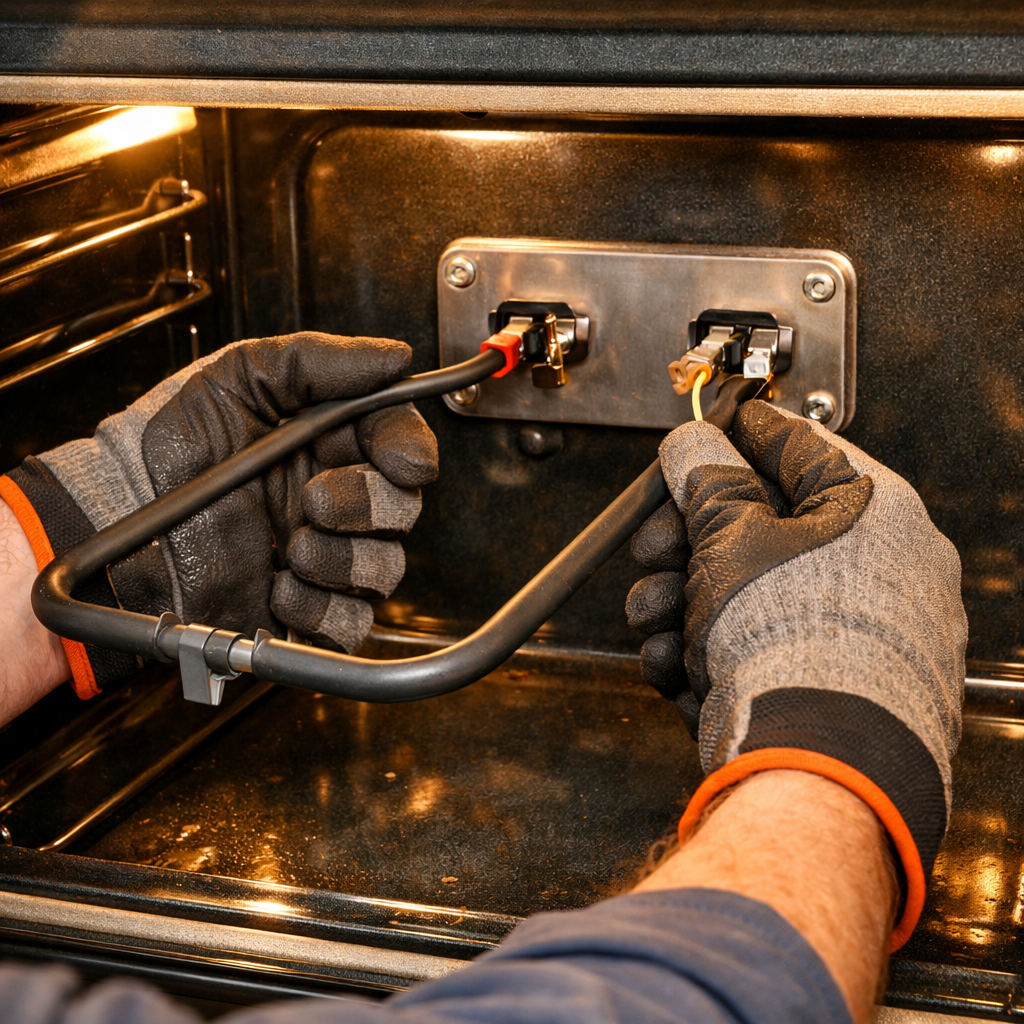
To replace the motor, first remove the four Phillips screws securing the interior back panel from inside the oven cavity and pull the panel away to expose the motor mounting behind it. The motor itself is held by 2–3 Phillips screws and connected by a wire harness — unplug the harness connector before unbolting the motor so you don’t stress the wires. Pro tip: take a photo of the harness connection before unplugging so you have a reference for reinstallation.
Step 5
Mount the new motor in the same orientation as the old one, reconnect the harness, and reinstall the back panel and fan cover. Restore power and run a Convection Bake cycle to confirm the fan runs quietly — listening for any residual noise verifies the repair was successful before you consider the job done. Make sure all screws are fully tightened, as a loose back panel can itself cause rattling during operation.
Step 6
After confirming the fan is quiet, run a burn-off cycle at 500°F for 30 minutes with windows open and your exhaust fan running. New motors are coated with manufacturing oils that burn off on first heat and can produce smoke and odor — this is normal and not a sign of a problem. Skipping this step may cause smoke to appear the first time a meal is cooked, which can be alarming and set off smoke detectors.
Where to Buy Replacement Parts
- GE Profile PB960SJSS convection fan motor WB26T10049 replacement
- GE electric range convection fan blade WB02T10147
- GE oven convection fan noise squealing grinding
When to Call a Professional
If the issue persists after completing all steps above, the problem may involve a failed main control board, a defective temperature sensor or high-limit thermostat, or wiring that requires specialized diagnostic equipment. Contact a licensed appliance technician. On gas models, do not attempt work on the gas valve, burner orifices, or supply line — that work is restricted to a licensed gas fitter in most jurisdictions.
How Much Does This Repair Cost?
| Repair route | Typical cost |
|---|---|
| Do it yourself | $20–$75 (parts) |
| Professional repair | $150–$300 (parts and labor) |
DIY replacement parts for a convection fan on the GE Profile PB960SJSS typically run $20–$75, depending on whether you replace the fan blade, motor, or both. A professional service call for the same repair generally costs $150–$300 including labor. Tackling this repair yourself can save you $100 or more.
Frequently Asked Questions
Is it safe to use my GE Profile PB960SJSS while the convection fan is making noise?
You can use the oven in standard bake mode, but avoid convection settings until the fan is repaired to prevent further damage to the motor or blade.
What usually causes the convection fan to make noise on this model?
The most common causes are a warped or cracked fan blade, worn motor bearings, or debris caught around the fan assembly inside the oven cavity.
Do I need special tools to replace the convection fan blade on the PB960SJSS?
Most of the repair requires only a quarter-inch nut driver and a Phillips screwdriver, making it a manageable DIY job for most homeowners.
The Convection Fan Motor That Stops the Grinding Noise on Your PB960SJSS
If you’ve ruled out a loose or damaged blade and the noise is still there—especially a grinding or humming sound that gets worse during convection cycles—the motor itself is shot. This is the exact replacement GE designed for your model, and it’s the part to go to when diagnosis points to motor failure rather than blade wear.
What works
- Direct OEM match means no guessing on fitment—mounts straight into the existing bracket without adapter nonsense
- Motor runs whisper-quiet once installed, no residual grinding or rattling even after weeks of heavy use
- Bearing quality is noticeably better than aftermarket knockoffs I’ve seen fail within a year
What doesn’t
- Price sits higher than generic fan motors, but you’re paying for longevity—cheap alternatives I’ve swapped out after 18 months aren’t worth the second trip
- Requires disconnecting the old motor’s wiring harness, which can be stubborn if corrosion has set in around the connectors
The one thing that trips people up: sometimes homeowners order the blade first because the noise sounds like something’s hitting, then realize the motor is actually the culprit after the blade swap doesn’t fix it. Save yourself that mistake by confirming the blade spins freely before you pull the trigger on parts—if the noise persists after a visual inspection of the blade, order this motor and you’ll be done in under an hour.
About This Article

Written by Dave Holt. Dave Holt has been taking apart and fixing household appliances since he was a teenager who couldn't leave a broken one alone. Eighteen years later, after fixing things for neighbors, friends, and anyone who'd let him, he's seen almost every failure mode there is. When he writes a repair guide here, it's based on the actual job, not a manufacturer overview. More about this site.
Scope and limits. Dave is a self-taught repairer, not a certified appliance technician. Unplug before you open anything, and leave sealed refrigeration systems, gas connections, and hardwired circuits to a qualified technician.