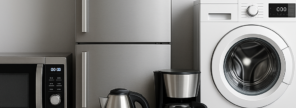
Model: Asko D5894XXLFI
Brand: Asko
Model Number: D5894XXLFI
🔍 Problem Description
Check for leaks in base pan; test aqua stop system; dry out base
📋 What You’ll Need
- Aqua stop system components
- Cleaning tools
- Unplug the dishwasher from the wall outlet, or switch off the dedicated circuit breaker at your electrical panel.
- Open the dishwasher door fully to access the interior.
- Remove all dish racks by pulling them straight out toward you until they clear the rail stops.
- Locate the lower spray arm in the center bottom of the tub and twist it counterclockwise approximately 1/4 turn, then lift it straight up to remove.
- Remove the cylindrical filter assembly in the center of the tub floor by turning it counterclockwise and lifting out.
- Look for the mesh screen filter beneath where you just removed the cylindrical filter—lift this out as well.
- Close the dishwasher door and pull the entire unit away from the cabinet opening approximately 18-24 inches to access the sides and rear.
- Tilt the dishwasher backward approximately 30-45 degrees by lifting the front edge, resting the unit against a sturdy surface or having a helper support it.
- Shine a flashlight underneath to locate the base pan, which is the black or gray plastic tray covering the entire bottom underside of the unit.
- Look for the rectangular float switch housing on the right side of the base pan, approximately 4 inches from the front right corner—this contains a white styrofoam float.
- Inspect the base pan for any visible water pooling, wetness, or moisture around the float switch area.
- Press gently on the base pan material with your fingers to feel for water squishing beneath the surface.
- If water is present, the F11 error indicates the leak detection system has activated—the styrofoam float has risen and triggered the microswitch above it.
- Return the dishwasher to its upright position and push it back toward the cabinet opening if no further inspection is needed at this time.
- Locate the aqua stop housing at the inlet valve connection point where the water supply hose enters the dishwasher, positioned at the bottom left rear corner approximately 2 inches from the left edge.
- Trace the wire harness from the aqua stop housing forward along the left side panel until you find a gray 2-pin connector approximately 8 inches from the housing.
- Disconnect the gray 2-pin connector by pressing the release tab on top with your thumb while pulling the connector halves apart.
- Set your multimeter to continuity testing mode (the symbol that looks like sound waves or shows “Ω”).
- Place one multimeter probe on each of the 2 metal terminals inside the aqua stop side of the connector (not the wire harness side).
- Observe the multimeter reading—you should see 0.5 to 2 ohms of resistance or hear a continuity beep, indicating the aqua stop float switch is in the closed (normal) position.
- Remove the lower kickplate panel by pulling it toward you at the bottom edge to release the 4 plastic clips.
- Reach behind the aqua stop housing and locate the white float chamber, a cylindrical component approximately 3 inches in diameter attached to the bottom of the housing.
- Gently lift the internal float mechanism inside the white chamber by inserting a flat-head screwdriver through any visible openings and pushing upward approximately 1 inch.
- While holding the float up, recheck the multimeter reading—it should now display “OL” (open line) or infinite resistance with no continuity beep, indicating the switch has opened.
- Release the float and verify the multimeter returns to showing continuity (0.5-2 ohms).
- Reconnect the gray 2-pin connector by aligning the tabs and pushing firmly until you hear a click.
- Locate 4-6 cotton shop towels or microfiber cloths that will absorb water effectively.
- Place your first towel into the center of the base pan where water has pooled, pressing down firmly with both hands for 10-15 seconds to absorb standing water.
- Move the saturated towel in a circular motion from the center outward toward the edges of the pan, soaking up all visible water.
- Replace the saturated towel with a dry one and repeat the wiping process, focusing on the corners where the base pan walls meet the floor—water accumulates heavily in these joints.
- Run your dry towel along the perimeter of the base pan, applying pressure into the 90-degree angle where the vertical wall meets the horizontal bottom surface.
- Locate the polystyrene float switch housing (white plastic dome, approximately 3 inches in diameter) positioned at the right rear corner of the base pan, 2-3 inches from both the right wall and back wall.
- Lift the float switch housing straight up—it sits in a circular recess and is not fastened—then wipe underneath it with a dry corner of your towel, removing any trapped moisture.
- Replace the float switch housing by aligning it with the circular recess and pressing down until it sits flush.
- Set up a fan (box fan or oscillating fan) positioned 2-3 feet from the open dishwasher, directing airflow into the base pan area.
- Allow the fan to run for 2-4 hours to evaporate residual moisture that towels cannot reach.
- After fan drying, press a dry towel firmly against all base pan surfaces one final time—the towel should come away completely dry with no damp spots visible, confirming the pan is moisture-free.
- Place two large towels on the floor beneath the dishwasher to catch any water during inspection.
- Locate the inlet hose connection at the left side of the dishwasher base, approximately 4 inches from the front edge—this is where the water supply line connects to the dishwasher’s intake valve.
- Run your fingers along the entire length of the inlet hose from the shut-off valve to the dishwasher connection point, feeling for moisture, bulges, or soft spots indicating deterioration.
- Check the metal clamps securing the inlet hose—one at the shut-off valve and one at the intake valve—by attempting to rotate them with your fingers; they should not move more than 1/8 inch.
- Tighten loose clamps using a 5/16-inch nut driver or flathead screwdriver, turning clockwise until the hose cannot be pulled off by hand but without crushing the hose material.
- Examine the drain hose located at the right rear corner of the dishwasher base, running from the pump outlet to the sink drain or garbage disposal connection.
- Trace the drain hose to its highest point (the air gap or high loop), checking for cracks, splits, or pooled water on top of the hose.
- Inspect the drain hose connection at the pump outlet—located at the bottom right rear, 3 inches from the right side—ensuring the spring clamp is fully engaged around the ribbed fitting.
- Look inside the kick plate area using a flashlight, scanning the floor pan for standing water or mineral deposits indicating past leaks.
- Check the spray arm supply tube connections underneath the lower spray arm by removing the spray arm (twist counterclockwise and lift up), then inspecting the rubber seal and connection point for cracks or gaps.
- Wipe all connection points dry with paper towels, then run a rinse cycle for 2 minutes to observe if any connections actively leak during water flow.
- Inspect the base pan (located beneath the inner tub assembly) for standing water using a flashlight – if water is present, use a wet/dry vacuum with a narrow attachment to remove all liquid from the pan.
- Locate the white polystyrene float chamber on the right side of the base pan, approximately 4 inches from the front edge – lift the red float mechanism inside and verify it moves freely up and down without sticking.
- Identify the source of the leak by examining these common failure points in order:
- For door seal issues: Remove the old gasket by pulling it out of the retaining groove around the door frame opening, clean the groove with a dry cloth, then press the new seal (part #8801396) into the groove starting at the top center and working around both sides until fully seated – the lip should face inward toward the tub.
- For hose connection leaks: Loosen the worm-gear clamp using a 7mm nut driver, slide the hose off, inspect the rubber hose end for cracks (trim 1/2 inch off if damaged), reattach the hose pushing it onto the barbed fitting until it covers all ridges, then tighten the clamp until snug (approximately 15 inch-pounds).
- After repairing the leak source, press the red float mechanism down firmly and release – it should spring back up immediately.
- Locate the reset button on the Aqua Stop control module (mounted on the right interior wall, 8 inches from the floor) – press and hold this small red button for 5 seconds until you hear a single click.
- Reconnect power to the dishwasher and run a rinse cycle – the F11 error should not reappear if the system is dry.
- W10508950 Dishwasher Upper Dishrack Slide Rail Stop Clip Fit for Whirlpool Kenmore Dishwasher, Replace 8562015 W10199682 WPW10508950VP 2684662 AP6022472 PS11755805 – Pack of 2 by Beaquicy
🔧 Step-by-Step Repair Instructions
🔧 Step 1: Check base pan for water accumulation
🛠️ Step 2: Test aqua stop system operation
⚙️ Step 3: Dry out base pan completely
🔩 Step 4: Inspect for leaks in hoses and connections
📋 Step 5: Repair leaks and reset aqua stop system
🛒 Recommended Products
Here are the recommended products for this repair:
As an Amazon Associate, I earn from qualifying purchases.