Water filters are essential for clean, safe drinking water, but there are many misconceptions about how they work and when they need to be replaced. Understanding the truth behind these common myths can help you maintain your water filter properly and ensure you’re getting the best filtration possible. Many homeowners make costly mistakes or compromise their health by following outdated or incorrect information about water filtration systems.
COMMON MYTHS DEBUNKED
Myth 1: “Filters last longer than 6 months if you don’t use much water”
Truth: Time-based degradation occurs regardless of use. Bacteria can grow in stagnant filters. Replace every 6-12 months maximum even with low use.
This is one of the most dangerous misconceptions about water filters. Many homeowners believe that if they only use their refrigerator’s water dispenser occasionally, or if their household has low water consumption, they can extend the filter’s lifespan well beyond the recommended replacement interval. Unfortunately, this thinking can lead to serious health risks and reduced water quality.
Water filters degrade over time through multiple mechanisms that are completely independent of how much water passes through them. Activated carbon, the primary filtration media in most refrigerator and pitcher filters, naturally loses its effectiveness as it ages. The carbon’s porous structure becomes saturated with contaminants, and even when not actively filtering water, the material continues to break down chemically. This process is accelerated by exposure to air, temperature fluctuations, and the natural breakdown of organic materials within the filter housing.
Perhaps more concerning is the bacterial growth that occurs in stagnant filters. When water sits in a filter for extended periods without being used, it creates an ideal environment for bacteria, mold, and other microorganisms to proliferate. These organisms can form biofilms on the filter media and housing, potentially contaminating your water supply. The longer a filter sits unused, the greater the risk of bacterial contamination, regardless of how clean the filter appeared when first installed.
Manufacturers recommend replacement intervals of 6-12 months not just based on water volume, but on time-based degradation factors. Even if you’ve only used your filter to dispense a few gallons of water over six months, the filter media has still aged, potentially harbored bacteria, and lost significant filtration capacity. Following the manufacturer’s time-based replacement schedule is essential for maintaining water quality and protecting your family’s health.
Myth 2: “You can clean and reuse refrigerator filters”
Truth: Carbon filters cannot be effectively cleaned. “Cleaning” may temporarily improve flow but doesn’t restore filtration capability. Replace, don’t clean.
The idea of cleaning and reusing water filters seems economical and environmentally responsible, but it’s fundamentally flawed when it comes to carbon-based filtration systems. Many homeowners attempt to extend their filter’s life by rinsing it under running water, soaking it in vinegar, or even trying to scrub the filter media. While these methods might temporarily improve water flow, they do absolutely nothing to restore the filter’s actual filtration capabilities.
Activated carbon filters work through a process called adsorption, where contaminants physically bond to the surface of the carbon particles. Once these binding sites are occupied by chlorine, lead, pesticides, or other contaminants, they cannot be “cleaned” back to their original state. The carbon’s porous structure becomes permanently filled with trapped contaminants. Rinsing might remove some loose sediment or debris that’s blocking water flow, but it cannot remove the molecular-level contaminants that are chemically bonded to the carbon.
Attempting to clean a carbon filter can actually make things worse. Aggressive cleaning methods like scrubbing or using harsh chemicals can damage the filter housing, compromise seals, or even break apart the carbon media, potentially releasing trapped contaminants back into your water supply. The filter housing and seals are designed for single-use, and cleaning attempts can introduce new pathways for unfiltered water to bypass the filter media entirely.
Some homeowners notice improved water flow after “cleaning” their filter and mistakenly believe this indicates restored filtration. In reality, they’ve likely just cleared some surface debris, while the filter’s actual contaminant-removal capacity remains completely exhausted. The only way to ensure proper filtration is to replace the filter according to the manufacturer’s schedule. While this means regular replacement costs, it’s the only way to guarantee that your water filter is actually protecting your health rather than just providing a false sense of security.
Myth 3: “All aftermarket filters are junk/unsafe”
Truth: Many aftermarket filters are NSF certified and perform well. Look for proper certifications, reputable brands (Waterdrop, Tier1, etc.). Not all are equal, but many are fine.
This myth persists largely because of aggressive marketing by original equipment manufacturers (OEMs) who want to lock customers into buying their expensive branded filters. While it’s true that some cheap, uncertified aftermarket filters are problematic, many third-party manufacturers produce high-quality, certified filters that perform just as well as OEM versions at a fraction of the cost.
The key to finding quality aftermarket filters is understanding certification standards. The National Sanitation Foundation (NSF) provides independent testing and certification for water filters. Look for filters that carry NSF/ANSI Standard 42 certification (for aesthetic effects like chlorine taste and odor) and NSF/ANSI Standard 53 certification (for health-related contaminants like lead, cysts, and volatile organic compounds). Reputable aftermarket brands like Waterdrop, Tier1, EveryDrop, and Culligan produce NSF-certified filters that meet or exceed OEM specifications.
Many aftermarket manufacturers actually use the same filtration media and technology as OEM filters, often sourcing from the same suppliers. The primary difference is usually in the housing design and branding, not the actual filtration capability. Independent testing by consumer organizations has repeatedly shown that certified aftermarket filters perform identically to OEM versions in contaminant removal tests.
However, it’s important to be selective. Avoid no-name filters sold on questionable websites without proper certifications. Stick to established brands with NSF certification and positive customer reviews. Check that the filter model number matches your appliance exactly, as improper fit can cause leaks or bypass issues. With proper research and attention to certifications, aftermarket filters can provide excellent filtration performance while saving significant money over OEM options.
Myth 4: “The filter light knows when the filter is bad”
Truth: Most filter lights are just timers (usually 6 months). They don’t measure actual filtration performance or water quality. Reset when you replace filter.
Many homeowners place complete trust in their refrigerator’s filter change indicator light, believing it’s a sophisticated sensor that monitors water quality and alerts them when filtration effectiveness declines. In reality, the vast majority of these indicator lights are nothing more than simple timers that count down from the date you last reset them, typically set to six months.
These timer-based systems have no ability to measure actual water quality, filter performance, or contaminant levels. They simply track elapsed time and illuminate when the preset interval expires, regardless of whether your filter is still functioning perfectly or completely exhausted. This means a filter that’s been heavily used in a household with poor water quality might be ineffective long before the light comes on, while a filter in a home with excellent municipal water might still be working fine after the indicator activates.
Some manufacturers have attempted to create more sophisticated systems using flow meters or pressure sensors, but even these don’t directly measure filtration effectiveness. They can detect when a filter becomes clogged enough to reduce water flow, but they cannot determine if the filter is still removing contaminants effectively. A filter might have normal flow but be completely saturated with contaminants, providing no actual filtration benefit.
The timer-based system is actually a reasonable compromise given the technical challenges of directly measuring water quality in real-time. However, it’s important to understand its limitations. If you have particularly poor source water, high usage, or notice changes in water taste or quality, don’t wait for the indicator light—replace the filter early. Conversely, if your indicator activates but you have excellent source water and low usage, the filter might still be effective, though following the manufacturer’s schedule is still the safest approach. Always remember to reset the indicator when you install a new filter to ensure accurate timing for the next replacement cycle.
Myth 5: “If water tastes fine, filter is fine”
Truth: Many contaminants (lead, cysts, pharmaceuticals) have no taste. Filter may taste fine but not be removing health hazards. Replace on schedule.
This is perhaps the most dangerous myth about water filters, as it leads people to believe their senses can reliably detect water quality issues. The reality is that many of the most serious water contaminants are completely undetectable by taste, smell, or appearance. Relying on your taste buds to determine filter effectiveness is like trying to detect carbon monoxide by smell—it simply doesn’t work.
Lead, one of the most dangerous water contaminants, is completely tasteless and odorless. Even at levels that can cause serious health problems, especially in children, lead-contaminated water can taste perfectly normal. Similarly, many pharmaceutical residues, industrial chemicals, and heavy metals have no taste or odor. Cryptosporidium and Giardia cysts, which can cause severe gastrointestinal illness, are also undetectable by taste.
What we typically taste in water—chlorine, minerals, or organic compounds—are often the least harmful contaminants. Municipal water systems add chlorine specifically because it has a noticeable taste and smell, making it easy to detect. However, a filter that’s still removing chlorine (which you can taste) might have already lost its ability to remove tasteless contaminants like lead or volatile organic compounds.
As a filter ages and becomes saturated, different types of contaminants are removed with varying effectiveness. The filter might continue removing chlorine (which affects taste) while losing its ability to remove health-threatening contaminants that have no taste. This creates a false sense of security where the water tastes fine, but dangerous contaminants are passing through unfiltered.
The only reliable way to ensure your filter is protecting your health is to replace it according to the manufacturer’s schedule, regardless of how the water tastes. If you’re concerned about water quality, consider having your water tested by a certified laboratory, but don’t rely on taste as an indicator of filter effectiveness. Your health is worth far more than the cost of a replacement filter, and following the recommended replacement schedule is the only way to ensure consistent protection against both detectable and undetectable contaminants.
Myth 6: “Expensive OEM filters are just a scam”
Truth: Partially true – OEM filters often have better QC and testing, but certified aftermarket filters can perform equally well. RFID models (GE RPWFE) actually require OEM due to chip.
This myth exists in tension with Myth 3, and the truth lies somewhere in between. While OEM filters are often significantly more expensive than aftermarket alternatives, calling them a “scam” oversimplifies a complex situation. OEM manufacturers do invest more in quality control, extensive testing, and ensuring perfect compatibility with their appliances. However, certified aftermarket filters can indeed perform equally well in most cases.
Original equipment manufacturers typically subject their filters to more rigorous testing protocols, including long-term performance studies, compatibility testing with their specific appliance models, and quality control processes that catch defects before products reach consumers. This additional testing and quality assurance does add real value, though whether it justifies the often 2-3x price premium is debatable.
However, there are specific situations where OEM filters are genuinely necessary. Some modern appliances, particularly certain GE refrigerator models, use RFID (Radio Frequency Identification) chips embedded in their filters. These chips communicate with the refrigerator to verify filter authenticity and track usage. The GE RPWFE filter, for example, contains an RFID chip that the refrigerator reads. Aftermarket filters without this chip will trigger error messages, and the refrigerator may refuse to dispense water or ice until a recognized filter is installed. In these cases, OEM filters aren’t just recommended—they’re required for the appliance to function properly.
For most standard filters without RFID requirements, certified aftermarket options from reputable brands provide equivalent filtration performance at lower cost. The key is choosing aftermarket filters that are NSF certified and from established manufacturers. If your appliance doesn’t require RFID authentication and you’re comfortable with aftermarket options, you can save significant money without sacrificing water quality. However, if you prefer the peace of mind that comes with OEM quality control and testing, or if your appliance requires RFID authentication, OEM filters are a valid choice despite their higher cost.
Myth 7: “Running without a filter is fine temporarily”
Truth: Some models allow bypass, some don’t. Water quality depends on your municipal supply. Safe in emergencies but not recommended long-term.
Many homeowners find themselves in situations where their filter needs replacement but they can’t get a new one immediately, or they’re waiting for a shipment to arrive. The question of whether it’s safe to run the appliance without a filter depends on several factors, including your appliance model, your water source, and how long you plan to operate without filtration.
First, it’s important to understand that not all appliances can operate without a filter. Some refrigerator models have filter housings that are part of the water line’s critical path—removing the filter would prevent water from flowing at all. These models require either a filter or a bypass plug to function. Other models have built-in bypass modes that allow water to flow around the filter housing when no filter is installed. Check your appliance’s manual to determine whether your model can operate without a filter.
If your appliance can operate without a filter, the safety of doing so depends entirely on your municipal water supply quality. If you receive water from a well-maintained municipal system that meets all EPA standards, the water is generally safe to drink unfiltered. However, filters do more than just make water “safe”—they also improve taste and odor by removing chlorine, reduce lead exposure (which can be present even in treated municipal water due to aging pipes), and remove other aesthetic contaminants.
Running without a filter for a day or two in an emergency situation is generally acceptable if you have good municipal water. However, this should be viewed as a temporary measure only. Without filtration, you’re missing the additional protection against contaminants that can enter water between the treatment plant and your tap, including lead from pipes, bacteria from biofilm in plumbing, and other issues. If you have a private well or are concerned about your water quality, operating without a filter is not recommended even temporarily.
The best practice is to keep a spare filter on hand so you can replace it immediately when the indicator light activates or when you notice reduced water flow. If you must operate without a filter temporarily, limit consumption to essential uses and replace the filter as soon as possible. For long-term operation, always use a properly installed, regularly replaced filter to ensure optimal water quality and protect your family’s health.
Understanding these myths and truths about water filters helps ensure you maintain your filtration system properly. Regular replacement on schedule, regardless of usage, is key to maintaining water quality and protecting your health. Don’t let misconceptions about filter lifespan, cleaning methods, or indicator lights compromise the safety of your drinking water. When in doubt, follow the manufacturer’s recommendations and replace filters according to schedule rather than relying on subjective indicators like taste or appearance.
For comprehensive troubleshooting guides, maintenance tips, cost comparisons, and buying advice, see our Water Filter Maintenance and Troubleshooting Guide.
Water Testing Products
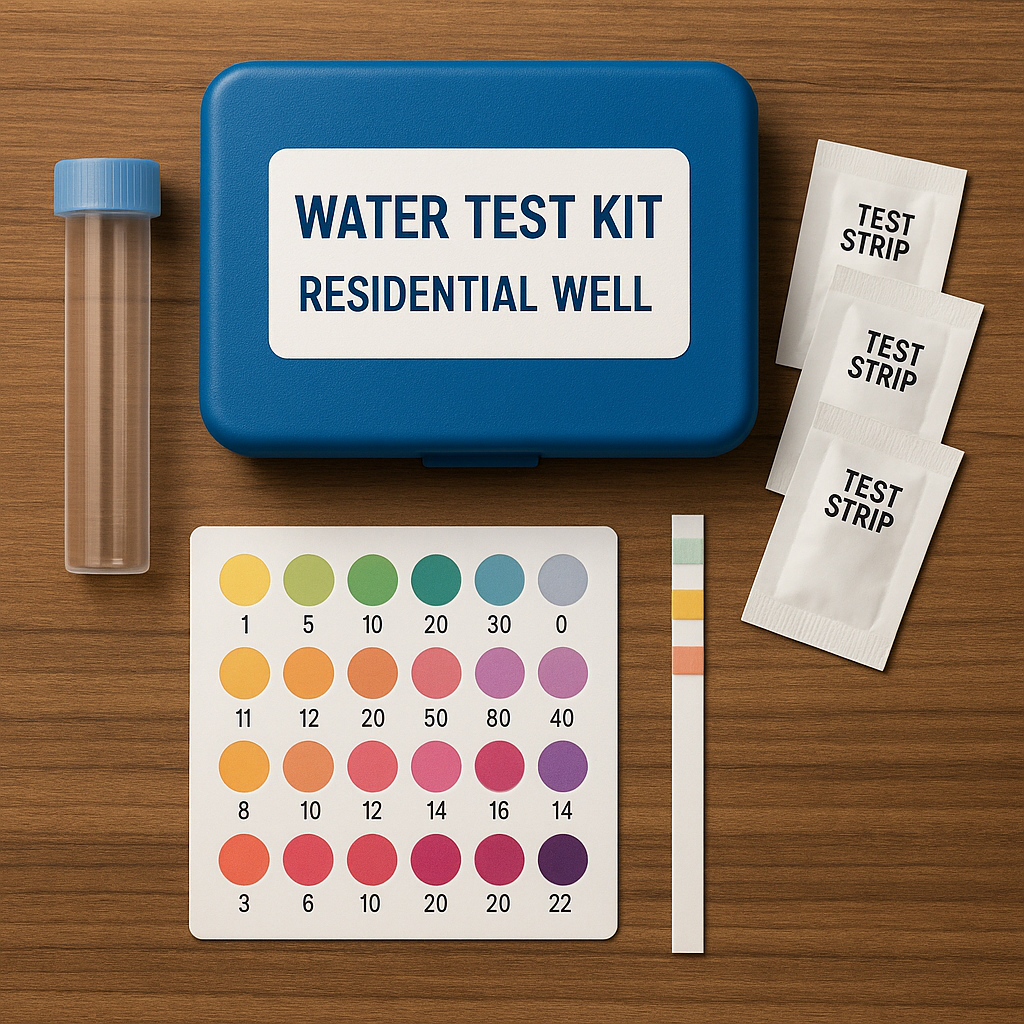
If you’re concerned about your water quality or want to verify that your filter is working properly, consider using a home water test kit. These products can help you identify contaminants, test for lead, check pH levels, and verify that your filtration system is effectively removing harmful substances. Regular testing is especially important if you have well water, live in an older home with lead pipes, or want to confirm your filter’s performance.
- 21-in-1 Home Drinking Water Testing Kit – 120 Strips + 4 Bacteria Tests – Tap and Well Water Test Kit, Easy to Test and Read for Hardness, Lead, Iron, Fluoride, pH, Copper, Bacteria and More ($29.99 ($0.24 / count))
- Varify 17in1 Complete Drinking Water Test Kit – 100 Strips + 2 Bacteria Tester Kits – Well, Tap, Home, City Water Testing Strip for Lead, Alkaline, Chlorine, Hardness, Iron, Fluoride, Copper & More ($26.97 ($0.27 / count))
- All-New 20 in 1 Drinking Water Testing Kit 120 Strips, Home Tap and Well Water Test Kit for Hardness, Lead, Iron, Copper, Chlorine, Fluoride ($24.99 ($0.21 / count))
- TESPERT Drinking Water Test Strips 125ct 16 in 1 – 30s Quick Screening for Hardness, pH, Iron, Nitrite, Copper, Chlorine, Nitrite, Carbonate,Lead, Alkalinity…Well, Tap, Home, City Water Testing ($16.99)
- Safe Home® DIY Lead in Drinking Water Test Kit – Advanced Detection to 4 PPB – 5-Minute Test – 3 Levels of Test Results – EPA Lab Certified – Made in The USA – (1 Pack) ($19.99)
- 21-in-1 Home Drinking Water Testing Kit,145 Strips + 4 Bacteria Tests,Tap and Well Water Test Kit, Easy to Test and Read Home Test Strips for Hardness, Lead, Iron, Fluoride, pH, Copper and More ($23.99 ($0.17 / count))
- WANJAO Hard Water Test Kit, Water Hardness Test Strips Water Test Rapid Detection Simple Operation Convenient to Carry Wide Range of Applications for Tap water Well water Swimming Pools Spas Aquariums ($9.99)
Note: For comprehensive water quality testing, especially for well water or if you suspect contamination, consider sending a sample to a certified laboratory for professional analysis. Home test kits are useful for regular monitoring, but professional testing provides the most accurate and comprehensive results.