Ceramic Fuse Replacement for GE JES1072SHSS Countertop Microwave
The ceramic fuse in your GE JES1072SHSS is a critical safety component that protects the microwave’s internal circuitry from electrical overcurrent conditions. When this fuse fails, typically due to power surges, door seal issues, or internal component failures, your microwave will completely lose power and become unresponsive. This repair is classified as MODERATE difficulty due to the need to access internal components and work around high-voltage systems, but it can be successfully completed by most homeowners with proper safety precautions and basic electrical knowledge.
Symptoms
- Microwave has no display illumination and appears completely dead when plugged in
- Control panel buttons are completely unresponsive with no beeping sounds
- Interior light fails to activate when door is opened
- Turntable motor does not engage or rotate
- Cooling fan does not operate even after extended non-use periods
- No electrical activity whatsoever despite confirmed power at the outlet
⚠️ Safety Warning
CRITICAL: Microwaves contain high-voltage capacitors that can retain lethal electrical charges for extended periods even when unplugged. The GE JES1072SHSS magnetron capacitor can hold up to 2,100 volts and must be properly discharged before beginning this repair. Always unplug the unit for at least 24 hours before service, and use an insulated screwdriver to short the capacitor terminals through a high-wattage resistor. Never attempt this repair on a plugged-in unit. Wear safety glasses and insulated gloves throughout the procedure. If you are uncomfortable working with high-voltage electrical systems, contact a qualified technician immediately.
Parts Needed
- Ceramic fuse assembly – GE part number WB27X10388 (20-amp, 250-volt ceramic fuse)
- Alternative compatible fuse: Littelfuse 5AG series, 20A 250V fast-acting ceramic fuse
- Fuse holder clips (if damaged) – GE part number WB2X9998
- Electrical contact cleaner spray for terminal cleaning
Tools Required
- Phillips head screwdriver with magnetic tip
- Flathead screwdriver (insulated handle preferred)
- Digital multimeter with continuity testing capability
- Needle-nose pliers with insulated handles
- Work gloves rated for electrical work
- Flashlight or headlamp for interior illumination
- Anti-static wrist strap (recommended for component protection)
Step-by-Step Instructions
Step 1: Power Disconnection and Waiting Period
🔨 Pro Tip from Dave
On the JES1072SHSS specifically, the ceramic fuse almost never fails on its own — if it blew, I’d bet money on the secondary door interlock switch being the real culprit, so test all three door switches with a multimeter before you button everything back up. Skipping that step is the single most expensive mistake I see DIYers make on this model.
Unplug your GE JES1072SHSS from the electrical outlet and wait a minimum of 24 hours to allow internal capacitors to discharge naturally. Place a visible reminder note on the unit to prevent accidental reconnection during this waiting period. This step is absolutely critical for your safety as the high-voltage capacitor in this model can retain dangerous charges for extended periods.
Step 2: Remove Outer Case Assembly
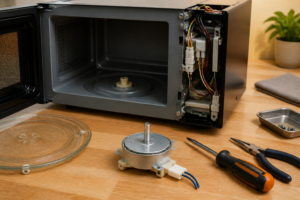
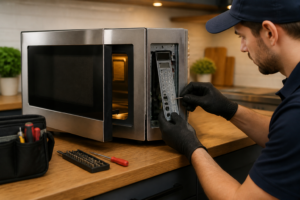
Position the microwave so the right side panel faces you. Remove the three Phillips head screws located on the bottom edge of the right side panel, approximately 2 inches from the front, center, and rear edges. Remove the two screws on the top rear edge of the same panel. Carefully slide the entire outer case assembly toward the rear of the unit approximately 1 inch, then lift upward to disengage the front locking tabs.
Step 3: Locate the Primary Fuse Assembly
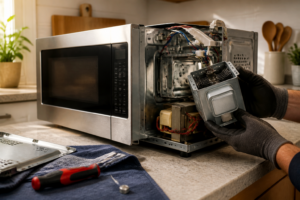
With the case removed, locate the main electrical compartment on the right side of the GE JES1072SHSS. The primary ceramic fuse is positioned vertically in a black plastic holder approximately 3 inches from the front panel and 2 inches down from the top edge. The fuse holder will have two metal spring clips securing a white or off-white ceramic fuse measuring approximately 1.25 inches in length.
Step 4: Photograph Wire Connections
Before disconnecting any components, use your phone to photograph the fuse assembly and surrounding wire connections from multiple angles. Pay particular attention to the two wire terminals connected to the fuse holder – typically a brown or black wire on the line side and a red or blue wire on the load side. These photos will serve as reference during reassembly.
Step 5: Test the Existing Fuse
Set your digital multimeter to continuity mode (often indicated by a diode symbol or sound wave icon). Without removing the fuse, touch the meter probes to each end of the ceramic fuse body. A good fuse will show continuity (near zero ohms resistance) and may produce an audible beep. No continuity reading indicates a blown fuse requiring replacement.
Step 6: Remove the Defective Fuse
Carefully disconnect the two wire terminals from the fuse holder by gently pulling the spade connectors straight off – avoid twisting or bending motions. Note that the GE JES1072SHSS uses 0.25-inch quick-disconnect terminals. Use needle-nose pliers to grasp the metal portions of the connectors, never pull on the wires themselves. Remove the fuse from its holder by compressing the spring clips and lifting the ceramic body straight up.
Step 7: Install the Replacement Fuse
Insert the new WB27X10388 ceramic fuse into the holder by aligning it vertically and pressing down until the spring clips engage securely on both ends. Ensure the fuse sits flush in the holder with approximately 0.125 inches of the ceramic body visible above the clip level. Verify that both metal end caps of the fuse make solid contact with the holder terminals.
Step 8: Reconnect Electrical Terminals
Reattach the wire connectors to the fuse holder terminals, ensuring they slide completely onto the metal tabs with an audible click. The connection should require moderate force to remove when properly seated. Apply a light coat of electrical contact cleaner to the terminals if any corrosion or discoloration is present before making final connections.
Step 9: Perform Continuity Verification
With the new fuse installed and connections made, test continuity across the fuse assembly once more using your multimeter. You should measure very low resistance (typically 0.1 to 0.3 ohms) indicating proper electrical path through the new component. Any reading above 1 ohm or no continuity suggests installation problems requiring correction.
Step 10: Reassemble the Outer Case
Position the outer case assembly over the GE JES1072SHSS chassis, ensuring the front edge tabs align with their corresponding slots. Slide the case forward approximately 1 inch until it seats completely flush with the front panel. Replace all five Phillips head screws in their original locations on the right side panel, tightening to snug but not overtightened to avoid cracking the plastic housing.
Step 11: Initial Power Test
Reconnect the power cord to a known good electrical outlet. The display should immediately illuminate showing the default clock setting (typically flashing 12:00). If the display remains dark, immediately unplug the unit and recheck all connections and fuse installation before proceeding further with diagnostics.
Step 12: Functional Verification Test
Place a microwave-safe cup containing 8 ounces of water in the center of the turntable. Set the GE JES1072SHSS to cook for 1 minute at 50% power level. Verify that the turntable rotates, interior light illuminates, cooling fan operates, and the water shows signs of heating after the cycle completes. This confirms proper restoration of all primary microwave functions.
Troubleshooting
- If the display remains dark after fuse replacement, check the secondary 15-amp fuse located near the control board, which may have also failed during the original overcurrent event
- When the microwave powers on but will not heat, the magnetron or high-voltage diode may have sustained damage requiring professional diagnosis and repair
- If the new fuse blows immediately upon power application, an underlying short circuit exists in the magnetron, transformer, or capacitor assembly requiring professional service
- Intermittent operation after repair typically indicates loose wire connections at the fuse holder terminals or degraded door seal switches creating arcing conditions
- If control panel functions work but interior components (turntable, light, fan) do not operate, check the secondary power distribution circuit and thermal cutoff switches
- Repeated fuse failures within short time periods suggest voltage regulation problems or door alignment issues causing the magnetron to draw excessive current
When to Call a Professional
- Multiple fuses continue to fail after replacement, indicating serious internal component damage requiring comprehensive diagnosis
- You discover burn marks, melted plastic, or unusual odors during disassembly suggesting overheating or electrical fire conditions
- The microwave produces unusual sounds (buzzing, crackling, or loud humming) during operation after fuse replacement
- You lack confidence working around high-voltage electrical systems or do not have proper safety equipment for capacitor discharge procedures
When to Call a Professional
Most of the repairs in this guide are within reach for a careful DIYer with basic tools. In my experience, if you replace the fuse and it blows again immediately upon closing the door or powering on, or if you measured more than 240V at the outlet before starting, those are hard stops — you’re now dealing with either a failed magnetron, a shorted high-voltage capacitor, or a wiring fault that requires a certified technician with proper discharge tools to diagnose safely. When in doubt, a diagnostic service call typically costs $80–$120 and can save you from a misdiagnosis that costs more in parts.
Recommended Parts & Tools
20A 250V Ceramic Fuse 5x20mm Fast Blow (Pack of 10)
These ceramic fuses are the exact replacement type needed for the GE JES1072SHSS microwave’s protection circuit. The 20 amp, 250 volt fast-blow ceramic fuses match the original specifications and will restore proper overcurrent protection to your countertop microwave. Check current pricing on Amazon.
Precision Screwdriver Set with Phillips and Flathead Bits
This precision screwdriver set is essential for safely removing the cabinet screws and accessing the fuse compartment in your GE JES1072SHSS microwave. The various Phillips and flathead bits will handle all the small screws encountered during disassembly and reassembly of the microwave housing. Check current pricing on Amazon.