Hidden bake element repair
This step-by-step repair guide walks you through fixing hidden bake element repair on your GE Profile PB960SJSS (Electric Range). With the right tools and parts, most homeowners can complete this repair in 1–2 hours and avoid a costly service call.
🔨 Pro Tip from Dave
On the PB960SJSS, the hidden bake element is part number WB44T10010 — and the biggest mistake I see DIYers make is forgetting to remove the oven bottom panel before assuming they have access to the element terminals. There’s a secondary bracket near the rear wall that requires a ¼-inch nut driver to release, and skipping that step can crack the ceramic floor panel. Always disconnect power at the breaker for at least 5 minutes before touching any terminals on this model.
Part of our Top 20 Oven Models & Common Repair Issues Guide. Browse all oven repair guides for related models and issues.
“`html
Common Symptoms & Causes
If your GE Profile PB960SJSS is experiencing a hidden bake element failure, you may notice one or more of the following signs during baking or preheating.
- The oven takes significantly longer than usual to reach the set temperature
- Food is undercooked or unevenly baked, with the bottom remaining raw
- The oven displays an F2 or F3 error code during or after a bake cycle
- The oven fails to heat at all when set to Bake, while Broil still works normally
These issues are most commonly caused by a burned-out or broken hidden bake element, which deteriorates over time due to repeated heating cycles, moisture exposure, or electrical surges.
“`
Safety First
- Unplug the oven from the power outlet before starting any repair — never work on a live appliance.
- Wear work gloves when handling metal brackets, sheet metal edges, or sharp components.
- Take photos with your phone before disconnecting any wiring harnesses or connectors.
- Work in a well-lit area with enough floor space to lay removed panels flat.
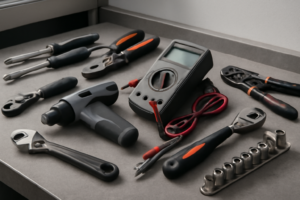
Tools & Parts Needed
Essential Tools
- Phillips #2 screwdriver
- ¼” nut driver
- Multimeter
- Work gloves (heat-rated)
- Flashlight
Replacement Parts
- Hidden bake element
- oven floor panel
- ¼” hex driver
- work gloves
Step-by-Step Repair Instructions
Step 1
Unplug the range from the wall outlet before doing anything else — working on a live 240V circuit can be fatal. With power removed, pull the oven floor panel out by removing the 1–2 Phillips screws at the rear and lifting the panel free; the hidden bake element lives beneath this panel, which is why the oven interior looks so clean. Set the panel aside carefully to avoid bending it, since a warped panel can rattle or sit unevenly when reinstalled.
Step 2
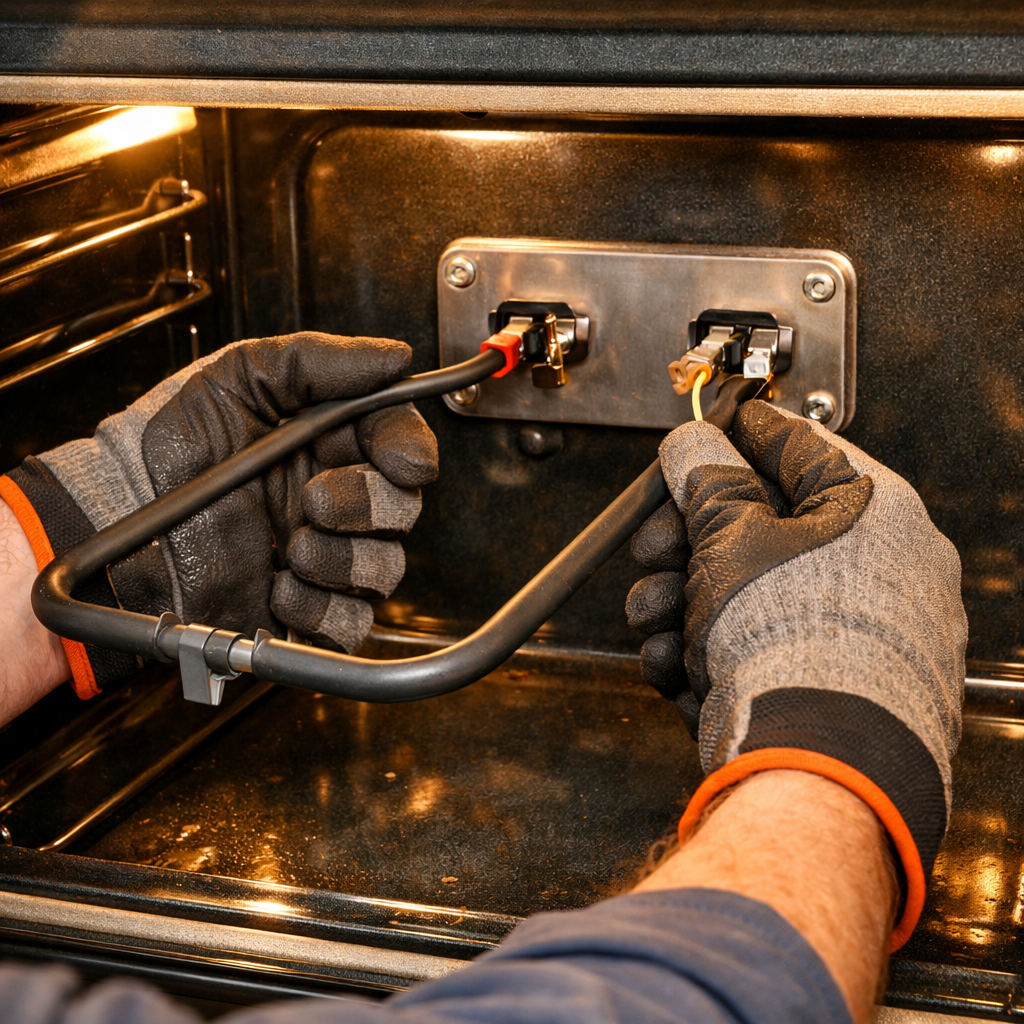
With the floor panel out, look toward the rear of the oven cavity to find the two spade connectors where the element connects to the supply wires. Identifying these terminals now confirms the element circuit is fully exposed and accessible before you start any testing or removal. Note the position of each connector if they differ in size or color — reconnecting them to the correct terminals matters for proper operation.
Step 3
Set your multimeter to Rx1 (resistance times 1) and touch the probes to the two spade terminals on the element itself to test for continuity. A working bake element typically reads between 20–60 ohms; an open reading (OL or infinite resistance) confirms the element has failed and must be replaced. This test rules out a wiring or control board problem before you spend money on parts — if the element reads good, the fault is elsewhere.
Step 4
Grip each spade connector with needle-nose pliers and pull it straight off the terminal with a firm, steady motion — yanking at an angle can damage the connector or break the wire. Then remove the two ¼” hex mounting screws at the rear of the element and slide the element out of its support guides toward you. Pro tip: take a photo of the element orientation and terminal positions before removal so you have a reference during installation.
Step 5
Slide the new element into the same guides in the same orientation as the old one, making sure it seats fully so the screws align without forcing. Drive the two ¼” hex mounting screws snug but not overtightened — stripping threads in the oven cavity wall is a difficult repair. Reconnect each spade connector to its correct terminal and press firmly until it seats; a loose spade connector will arc and cause premature failure.
Step 6
Set the oven floor panel back in place and reinstall its screws before plugging the range back in — never energize the unit with the cavity floor removed. Plug in the range, set it to Bake at 350°F, and observe the first 10–15 minutes of the heat cycle; the element should heat evenly with no flickering, burning smell, or visible hot spots glowing brighter than the rest. If you notice uneven heating or tripped breakers, unplug immediately and recheck your terminal connections and element resistance.
Where to Buy Replacement Parts
Find genuine OEM and aftermarket replacement parts for your GE Profile PB960SJSS (Electric Range) on Amazon:
- GE Profile PB960SJSS hidden bake element WB44T10009 replacement
- GE electric range hidden bottom bake element replacement procedure
- GE Profile oven floor panel removal hidden element access
When to Call a Professional
If the issue persists after completing all steps above, the problem may involve the sealed refrigerant system, a failed main control board, or wiring that requires specialized diagnostic equipment. Contact a licensed appliance technician — attempting sealed-system repairs without EPA 608 certification is illegal and unsafe.
“`html
How Much Does This Repair Cost?
A replacement hidden bake element for the GE Profile PB960SJSS typically costs between $30 and $80 in parts alone. A professional service call for this repair generally runs $150 to $300, including labor. By tackling this repair yourself, you can save $100 or more while restoring your range to full working order.
“`
Frequently Asked Questions
How do I know if the hidden bake element on my GE Profile PB960SJSS is faulty?
Common signs include uneven baking, the oven not reaching temperature, or visible burn marks on the oven floor panel. You can also test the element for continuity using a multimeter.
Do I need to remove the oven floor to access the hidden bake element?
Yes, the hidden bake element on the PB960SJSS sits beneath the oven floor panel. Remove the panel screws and lift it out to expose the element underneath.
Is it safe to replace the hidden bake element myself?
Yes, as long as you disconnect power to the range before starting. Always unplug the unit or switch off the circuit breaker before handling any electrical components.