Spray arm clog
This step-by-step repair guide walks you through fixing spray arm clog on your Bosch SHPM88Z75N. With the right tools and parts, most homeowners can complete this repair in 1–2 hours and avoid a costly service call.
🔨 Pro Tip from Dave
On the SHPM88Z75N, don’t overlook the upper spray arm’s center hub connection point — it uses part number 00611475, and techs often replace just the arm without checking that the hub seal is fully seated, which causes the same poor-wash symptoms to return within weeks. Also, the lower spray arm snaps off counterclockwise, not clockwise — I’ve seen homeowners crack the mount forcing it the wrong direction.
Part of our Top 20 Dishwasher Models & Common Repair Issues Guide. Browse all dishwasher repair guides for related models and issues.
“`html
Common Symptoms & Causes
The following symptoms suggest your Bosch SHPM88Z75N is suffering from a clogged spray arm.
- Dishes on the upper or lower rack come out with visible food residue or grease after a full cycle
- Water pooling at the bottom of the tub instead of draining and circulating properly
- Noticeably weak or uneven water pressure during the wash cycle
- Spray arm does not spin freely when manually rotated by hand
These issues are most commonly caused by a buildup of hard water mineral deposits, food particles, or broken glass fragments blocking the spray arm holes over time.
“`
Safety First
- Unplug the dishwasher from the power outlet before starting any repair — never work on a live appliance.
- Shut off the water supply valve before disconnecting any water lines or hoses.
- Wear work gloves when handling metal brackets, sheet metal edges, or sharp components.
- Take photos with your phone before disconnecting any wiring harnesses or connectors.
- Work in a well-lit area with enough floor space to lay removed panels flat.
Tools & Parts Needed
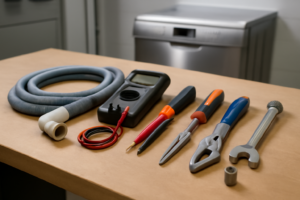
Essential Tools
- Phillips #2 screwdriver
- Torx T20 screwdriver
- Needle-nose pliers
- Multimeter
- Flashlight
Replacement Parts
Step-by-Step Repair Instructions
Step 1
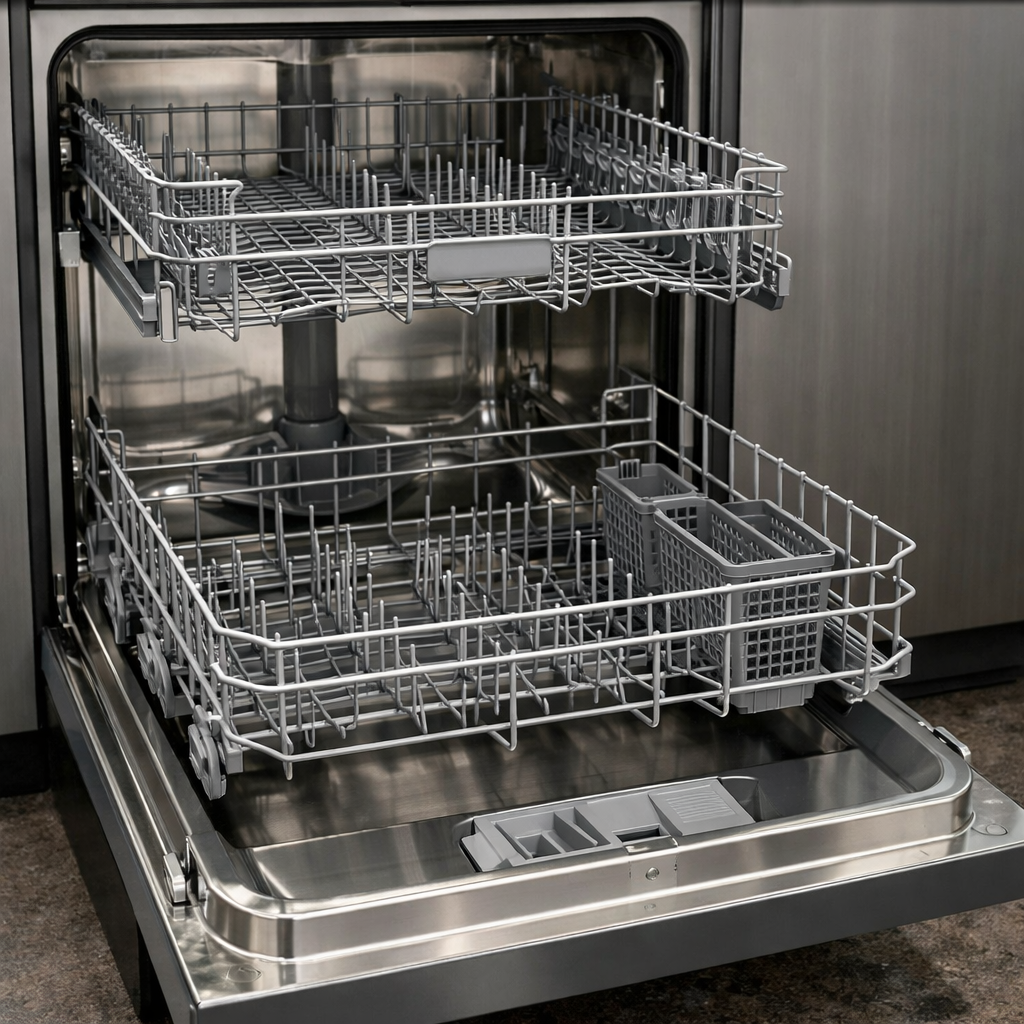
Twist the upper spray arm counter-clockwise to release it from its supply tube, then lift the lower spray arm straight up off its post. Removing both arms gives you full access for inspection and cleaning — trying to clear clogs while the arms are still installed is ineffective and risks missing blocked nozzles. Pro tip: note the orientation of each arm before removal so reinstallation is straightforward.
Step 2
Hold each arm up to a light source and look through every nozzle hole — a clogged hole will appear dark or fully blocked rather than letting light pass cleanly through. Insert a toothpick into each blocked hole to break up and push out mineral deposits; this mechanical clearing is necessary because even a few clogged nozzles can create weak wash zones and leave dishes dirty. Avoid metal picks or wire, which can enlarge the holes and permanently alter the spray pattern.
Step 3
Submerge both arms in a 1:1 solution of white vinegar and warm water and let them soak for 30 minutes; the acetic acid dissolves calcium and limescale that toothpick clearing alone cannot fully remove. After soaking, rinse each arm under a strong tap to flush loosened debris out of the nozzles and internal channels. This step is especially important in hard-water areas where mineral buildup accumulates quickly and recurring clogs are common.
Step 4
Inspect the bearing ring on the lower arm’s hub by gently rocking the arm — if it wobbles or feels loose rather than spinning smoothly, the bearing ring is worn and the arm won’t seal properly against the supply tube, causing poor water pressure. A damaged ring is a frequently overlooked cause of weak spray performance that persists even after thorough cleaning. Replacement bearing rings are inexpensive and available by part number for the SHPM88Z75N; replace now rather than reassembling with a compromised part.
Step 5
Reinstall the lower spray arm by pressing it firmly down onto its post until you hear and feel a distinct click, confirming it is seated and locked. Reinstall the upper arm by inserting it onto the supply tube and twisting clockwise until it stops and feels secure. Safety note: an improperly seated arm can detach during operation, obstruct the wash tub, and damage the pump — always confirm both arms spin freely by hand after installation.
Step 6
Run a full heavy wash cycle with the dishwasher empty so you can observe performance without a dish load interfering. Open the door mid-cycle if your model allows, or inspect immediately after the wash phase, to confirm that all nozzles are spraying vigorously with no dripping, weak zones, or uneven coverage. If weak spray persists after this repair, the next diagnostic step is checking the circulation pump and the supply tube o-rings for wear or blockage.
Where to Buy Replacement Parts
Find genuine OEM and aftermarket replacement parts for your Bosch SHPM88Z75N on Amazon:
- Bosch SHPM88Z75N upper spray arm 00611776 replacement
- Bosch dishwasher lower spray arm cleaning clog
- Bosch dishwasher wash arm bearing ring replacement
When to Call a Professional
If the issue persists after completing all steps above, the problem may involve the sealed refrigerant system, a failed main control board, or wiring that requires specialized diagnostic equipment. Contact a licensed appliance technician — attempting sealed-system repairs without EPA 608 certification is illegal and unsafe.
“`html
How Much Does This Repair Cost?
DIY repair for a spray arm clog on the Bosch SHPM88Z75N typically costs between $10–$40 for replacement spray arm parts or cleaning supplies. A professional service call runs $150–$300 once you factor in labor and diagnostic fees. Tackling this repair yourself can save you over $100 in most cases.
“`
Frequently Asked Questions
How do I remove the spray arm on my Bosch SHPM88Z75N?
Simply twist the spray arm counterclockwise and pull it downward to detach it from the mount. No tools are required for removal on this model.
What is the best way to clear a clogged spray arm?
Soak the spray arm in warm white vinegar for 20–30 minutes, then use a toothpick to clear debris from each nozzle hole. Rinse thoroughly before reinstalling.
How often should I clean the spray arms to prevent clogs?
Clean the spray arms every one to three months depending on your water hardness and how frequently you run the dishwasher. Hard water areas may require monthly cleaning.
Recommended Products
These are the parts and tools we recommend for this repair, based on compatibility and customer reviews:
- Bosch 00745856 Dishwasher Upper Spray Arm Assembly
- Bosch 00668385 Genuine OEM Upper Spray Arm (Gray) for Bosch Dishwashers
- US-Based Supplier – 00745856 Genuine OEM Dishwasher Upper Spray Arm Assembly Replaces AP5691325, 745856 and Compatible With Bosch Thermador Dishwashers
As an Amazon Associate, I earn from qualifying purchases.