Radiant sensor failure
This step-by-step repair guide walks you through fixing radiant sensor failure on your Maytag MGD5630HW (Gas). With the right tools and parts, most homeowners can complete this repair in 1–2 hours and avoid a costly service call.
🔨 Pro Tip from Dave
On the MGD5630HW, the radiant sensor (part number WP3390291) sits close to the burner assembly, and heat stress can cause the spade connectors on the wiring harness to become brittle and pull away from the terminal — always inspect and reseat those connectors before condemning the sensor itself. A common mistake I see is technicians skipping the continuity test and replacing the sensor when the real culprit is a corroded connector that just needs cleaning or a gentle crimp.
Part of our Top 20 Dryer Models & Common Repair Issues Guide. Browse all dryer repair guides for related models and issues.
“`html
Common Symptoms & Causes
If your Maytag MGD5630HW is experiencing a radiant sensor failure, you may notice one or more of the following symptoms during normal operation.
- The dryer displays an “F4E4” or “F4E3” error code on the control panel
- Clothes come out damp even after a full timed or auto-dry cycle
- The dryer runs continuously without shutting off at the end of a cycle
- The drum heats unevenly or produces excessive heat, scorching fabrics
These issues are typically caused by a worn or failed radiant sensor that can no longer accurately detect heat levels inside the drum, often due to prolonged heat exposure, lint buildup, or normal component aging.
“`
Safety First
- Unplug the dryer from the power outlet before starting any repair — never work on a live appliance.
- Wear work gloves when handling metal brackets, sheet metal edges, or sharp components.
- Take photos with your phone before disconnecting any wiring harnesses or connectors.
- Work in a well-lit area with enough floor space to lay removed panels flat.
Tools & Parts Needed
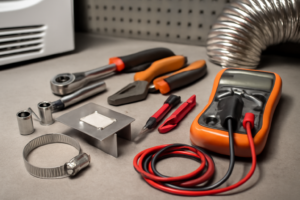
Essential Tools
- Phillips #2 screwdriver
- ¼” nut driver
- Putty knife
- Multimeter
- Work gloves
Replacement Parts
Step-by-Step Repair Instructions
Step 1
The radiant sensor monitors burner flame temperature and signals the gas valve to stay open during heating. When it fails, the burner lights and runs briefly for 5–10 seconds before shutting off, causing the dryer to cycle through short heat pulses instead of maintaining a steady flame. If your clothes are coming out damp and you hear the burner repeatedly igniting and cutting out, a faulty radiant sensor is the likely culprit.
Step 2
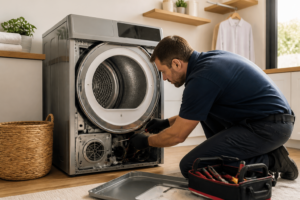
Before touching any components, unplug the dryer from the wall outlet and shut off the gas supply valve behind the unit to eliminate electrical and combustion hazards. Remove the lower front panel to access the burner assembly, then locate the radiant sensor — it’s the small flat bi-metal strip mounted near the base of the igniter. Pro tip: take a photo of the sensor position and wire routing before you disconnect anything so reassembly is straightforward.
Step 3
Set your multimeter to Rx1 and probe both terminals of the radiant sensor to check for continuity. A good sensor reads continuity at room temperature; if you get an open reading (no continuity) at room temp, the bi-metal strip has permanently tripped and the sensor will never allow the gas valve to stay open long enough to heat the drum. This single test confirms whether the sensor is the root cause before you spend money on parts.
Step 4
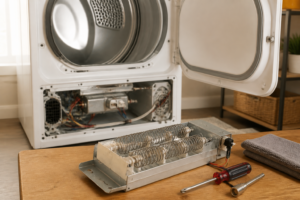
To replace the sensor, unplug the two wire terminals from the sensor body — they pull straight off and are not fragile, but avoid yanking by the wires. Remove the single Phillips mounting screw securing the sensor bracket, swap in the new sensor, and reconnect the terminals, making sure both are fully seated. Pro tip: handle the new bi-metal sensor carefully and avoid bending it, as deforming the strip can cause it to trip prematurely.
Step 5
If the new sensor doesn’t resolve the issue, the cycling thermostat — mounted on the heater housing at the rear panel — can produce an identical symptom pattern because it also controls burner on/off cycling. Test it the same way: set your multimeter to Rx1 and check for continuity at room temperature; a good thermostat reads continuous, and an open reading at room temp means it has failed and needs replacement. Replacing one component at a time lets you pinpoint the exact failure rather than guessing.
Step 6
Once repairs are complete, reopen the gas supply valve fully and plug the dryer back into the outlet. Run a timed heated cycle and observe the burner through the lower panel opening or listen for consistent operation — the burner should ignite once and maintain a steady, continuous flame without repeatedly cutting in and out. If pulsing continues after replacing both components, the gas valve coils themselves may be the next item to test.
Where to Buy Replacement Parts
Find genuine OEM and aftermarket replacement parts for your Maytag MGD5630HW (Gas) on Amazon:
- Maytag MGD5630HW radiant sensor WP3390719 replacement
- Maytag gas dryer cycling thermostat WP3387134
- Maytag dryer flame sensor opens circuit repair
When to Call a Professional
If the issue persists after completing all steps above, the problem may involve the sealed refrigerant system, a failed main control board, or wiring that requires specialized diagnostic equipment. Contact a licensed appliance technician — attempting sealed-system repairs without EPA 608 certification is illegal and unsafe.
“`html
How Much Does This Repair Cost?
Replacing a radiant sensor on the Maytag MGD5630HW typically costs $20–$60 in parts when tackling the repair yourself. A professional service call for the same fix usually runs $150–$300 once you factor in labor and diagnostic fees. By going the DIY route, you can save over $100 and have your dryer running again quickly.
“`
Frequently Asked Questions
How do I know if the radiant sensor on my Maytag MGD5630HW has failed?
Common signs include the dryer running but producing no heat, or the drum overheating without shutting off. You can confirm a faulty radiant sensor by testing it with a multimeter for continuity.
Is it safe to replace the radiant sensor myself on a gas dryer?
Yes, replacing the radiant sensor does not involve the gas line directly, making it a manageable DIY repair. Always unplug the dryer and shut off the gas supply before beginning any work.
Where is the radiant sensor located on the Maytag MGD5630HW?
The radiant sensor is mounted near the burner assembly inside the dryer’s front panel. You will need to remove the front panel to access and replace it.
Recommended Products
These are the parts and tools we recommend for this repair, based on compatibility and customer reviews:
- Upgraded 338906 Gas Dryer Flame Sensor for Whirl-Pool Ken-More Ro-per Dryer Replaces WP338906 AP6008294 PS11741429 DC32-00008A Y303377 3-3377 14205529 by Sikawai
- Upgraded 12001656 Oven Temperature Sensor Part – Compatible with Whirlpool Kenmore Ovens – Replaces AP4009009 74004943 PS1570174 12001554 12001656VP 7430P003-60 WB21X5301
- newlifeapp 338906 Gas Dryer Flame Sensor Replacement – Compatible with Whirlpool, Kenmore, Maytag, Samsung, LG – Radiant Heat Sensor for Gas Burner Igniter – Replaces AP3094244, 2392, 58823, 14218928
As an Amazon Associate, I earn from qualifying purchases.