No heat — E1 code
This step-by-step repair guide walks you through fixing no heat — e1 code on your GE GTD65EBSJWS (Electric). With the right tools and parts, most homeowners can complete this repair in 1–2 hours and avoid a costly service call.
🔨 Pro Tip from Dave
On the GTD65EBSJWS, don’t just replace the thermal fuse (WE4X857) and call it done — that fuse blew for a reason, and skipping the root cause check almost guarantees a callback. Always test the heating element for continuity and inspect the exhaust vent for blockage before buttoning it back up. A clogged vent is the hidden culprit behind most repeat thermal fuse failures on this model.
Part of our Top 20 Dryer Models & Common Repair Issues Guide. Browse all dryer repair guides for related models and issues.
“`html
Common Symptoms & Causes
The following symptoms point to a heating failure triggered by an E1 fault code on the GE GTD65EBSJWS electric dryer.
- The dryer display shows the “E1” error code during or after a cycle
- Clothes come out damp or completely wet after a full drying cycle
- The drum spins normally but no warm air is produced
- The dryer shuts off early and the E1 code reappears on restart
This issue is most commonly caused by a failed heating element, a blown thermal fuse, or a faulty thermistor — components that wear out over time or fail due to restricted airflow from lint buildup.
“`
Safety First
- Unplug the dryer from the power outlet before starting any repair — never work on a live appliance.
- Wear work gloves when handling metal brackets, sheet metal edges, or sharp components.
- Take photos with your phone before disconnecting any wiring harnesses or connectors.
- Work in a well-lit area with enough floor space to lay removed panels flat.
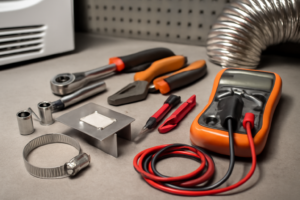
Tools & Parts Needed
Essential Tools
- Phillips #2 screwdriver
- ¼” nut driver
- Putty knife
- Multimeter
- Work gloves
Replacement Parts
- Heating element
- thermal fuse
- high-limit thermostat
- ¼” hex driver
- multimeter
Step-by-Step Repair Instructions
Step 1
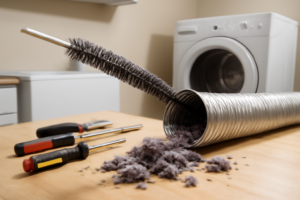
Unplug the dryer before doing anything else, then clean the entire vent run from the dryer exhaust port to the exterior cap using a flexible brush kit — a clogged vent traps heat and is the leading cause of thermal fuse failure, so skipping this step almost guarantees the new fuse will blow again. Work the brush from the dryer outward to push lint out the exterior cap rather than back into the machine. Pro tip: if the duct run is long or has multiple bends, consider using a drill-powered brush kit for a thorough clean.
Step 2
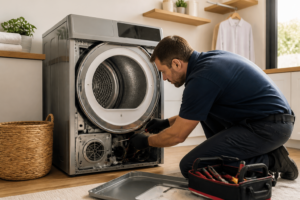
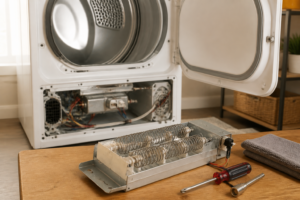
Remove the rear panel by taking out the five quarter-inch hex screws, which exposes the heating element (part WE11X10007) sitting inside its metal housing. Set your multimeter to Rx1 and probe both terminals of the element — a working element reads near zero ohms, while an open (infinite) reading confirms the coil has burned through and must be replaced. Safety note: double-check the dryer is unplugged before touching any internal components.
Step 3
Locate the thermal fuse (part WE4M137) on the exhaust housing — its job is to blow permanently when the dryer overheats, cutting power to the heating circuit and triggering the E1 code. Test it on Rx1; a good fuse reads continuity (near zero ohms), and no continuity means it is blown and must be replaced. Important: if the heating element has also failed, always replace both the element and the thermal fuse together, because a failed element typically caused the overheating that blew the fuse.
Step 4
Test the high-limit thermostat on Rx1 — it should show continuity under normal conditions, and an open reading means it has failed and is blocking the heating circuit. The high-limit thermostat acts as a secondary safety cutoff, so a failed one will prevent heat even after other components are replaced. Replace it if it reads open; it is an inexpensive part and worth swapping during this repair to avoid a callback.
Step 5
Install the new heating element, thermal fuse, and any failed thermostat, reconnecting every wire terminal to exactly the same position it came from — photograph the wiring before disconnecting anything to avoid guesswork on reassembly. Seat the thermal fuse and thermostat firmly against the exhaust housing so they make proper thermal contact, which is required for them to sense temperature accurately. Reinstall the rear panel and snug all five screws before moving to vent testing.
Step 6
Before running the dryer, verify strong airflow through the entire vent duct by holding your hand at the exterior cap and running a timed heat cycle — you should feel a firm, steady stream of warm air, not a weak trickle. A restricted duct will overheat the drum and blow the new thermal fuse within days, repeating the exact failure you just repaired. If airflow is weak, inspect for crushed flexible duct, blockages in the exterior cap flap, or duct runs that exceed the manufacturer’s maximum length for your installation.
Where to Buy Replacement Parts
Find genuine OEM and aftermarket replacement parts for your GE GTD65EBSJWS (Electric) on Amazon:
- GE GTD65EBSJWS heating element WE11X10007 replacement
- GE electric dryer thermal fuse WE4M137 replacement
- GE dryer high limit thermostat WE04X25796
When to Call a Professional
If the issue persists after completing all steps above, the problem may involve the sealed refrigerant system, a failed main control board, or wiring that requires specialized diagnostic equipment. Contact a licensed appliance technician — attempting sealed-system repairs without EPA 608 certification is illegal and unsafe.
“`html
How Much Does This Repair Cost?
DIY parts for this repair — such as a thermal fuse or heating element — typically cost between $10 and $60. A professional service call for the same fix usually runs $150–$300 including labor. By tackling this repair yourself, you can save over $100 while getting your dryer back up and running quickly.
“`
Frequently Asked Questions
What does the E1 code mean on my GE GTD65EBSJWS dryer?
The E1 code on the GE GTD65EBSJWS indicates a thermistor failure, meaning the dryer’s temperature sensor is sending an incorrect or missing signal. Replacing the thermistor typically clears the code and restores normal heating.
Is it safe to run my electric dryer while it shows an E1 code?
No, you should avoid running the dryer until the issue is resolved, as it will not heat properly and could damage your clothing or the appliance.
How much does it cost to fix an E1 code on this GE dryer?
A replacement thermistor for the GTD65EBSJWS typically costs between $10 and $30, making this a budget-friendly DIY repair if you’re comfortable with basic appliance work.
Recommended Products
These are the parts and tools we recommend for this repair, based on compatibility and customer reviews:
- ClimaTek Upgraded Dryer Thermal Fuse fits GE WE4X857 AP2042879 276927
- General Electric WE4X857 Dryer Thermal Fuse
- WE1X21975 Clothes Dryer Ceramic Fuse Replacement for GE Dryer 4248223 30 Amp 250 Volt 3AB (2 Pack)
- WE4M181 Dryer Cycling 4 Wire Thermostat for GE Dryer AP2044414 PS267926
As an Amazon Associate, I earn from qualifying purchases.