Drum noise
This step-by-step repair guide walks you through fixing drum noise on your LG WM3700HWA (Front Load). With the right tools and parts, most homeowners can complete this repair in 1–2 hours and avoid a costly service call.
🔨 Pro Tip from Dave
On the WM3700HWA, don’t overlook the drum spider assembly (part #AEC73317908) — it’s notorious for cracking at the arm joints, which creates a grinding or clunking noise that’s easy to misdiagnose as bad bearings. A common mistake I see is technicians replacing the bearings without inspecting the spider, only to have the noise return within weeks. Always inspect both before ordering parts.
Part of our Top 20 Washing machine Models & Common Repair Issues Guide. Browse all washing machine repair guides for related models and issues.
“`html
Common Symptoms & Causes
These symptoms on your LG WM3700HWA typically point to a drum noise issue that needs attention before it worsens.
- A loud banging or thumping sound occurs during the spin cycle
- A grinding or scraping noise is heard when the drum rotates at any speed
- A rhythmic squealing sound persists throughout the wash cycle
- The drum feels rough or catches slightly when turned by hand
These issues are most commonly caused by worn drum bearings, a damaged rear bearing seal, foreign objects lodged between the drum and tub, or a failing drum spider assembly due to normal wear over time.
“`
Safety First
- Unplug the washing machine from the power outlet before starting any repair — never work on a live appliance.
- Shut off the water supply valve before disconnecting any water lines or hoses.
- Wear work gloves when handling metal brackets, sheet metal edges, or sharp components.
- Take photos with your phone before disconnecting any wiring harnesses or connectors.
- Work in a well-lit area with enough floor space to lay removed panels flat.
Tools & Parts Needed
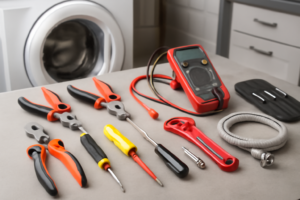
Essential Tools
- Phillips #2 screwdriver
- ¼” nut driver
- Torx T20 screwdriver
- Multimeter
- Bucket and towels
Replacement Parts
- Drum bearing kit
- spider arm
- inner baffle screws
- multimeter
Step-by-Step Repair Instructions
Step 1
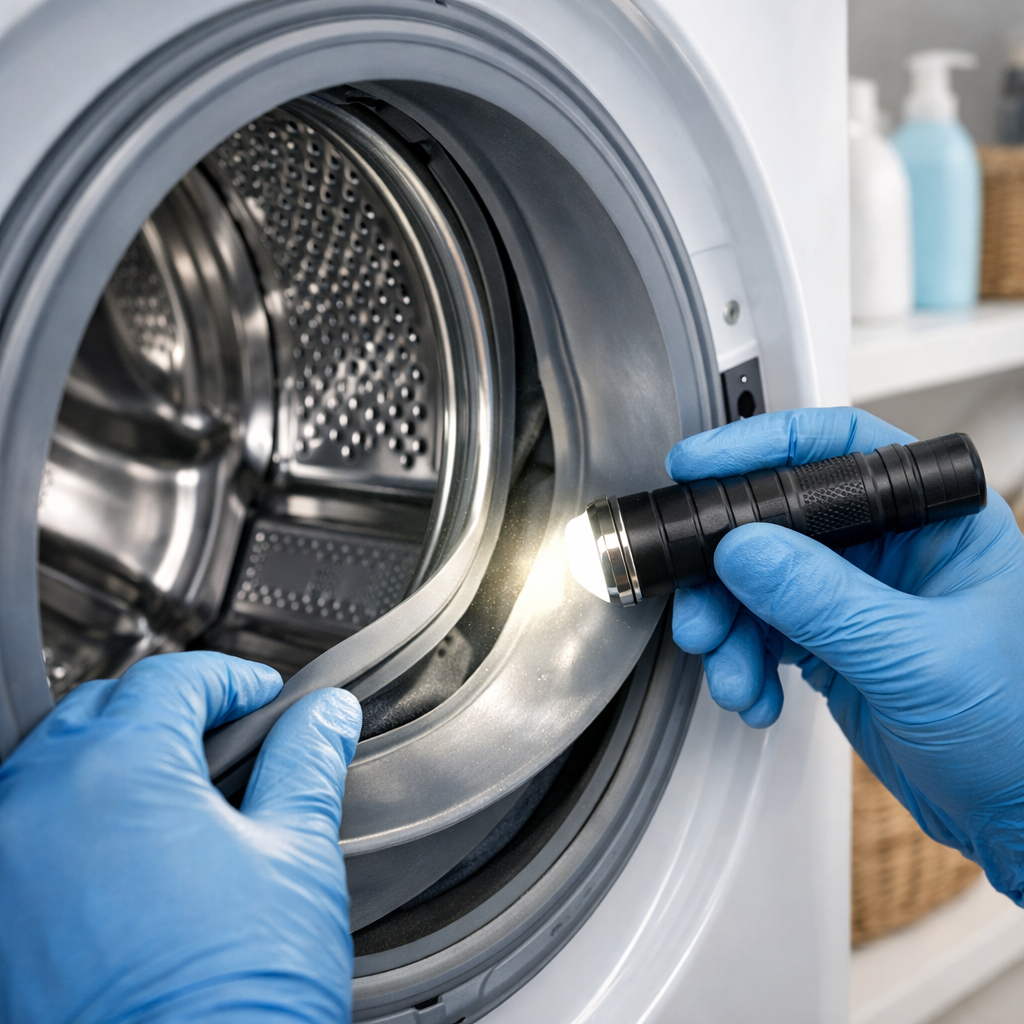
Open the washer door and slowly spin the drum by hand to diagnose the noise type before disassembly. A clunking sound indicates a loose baffle screw or a foreign object tumbling inside the drum, while a grinding or rumbling sensation points to bearing failure deep in the tub. Identifying the noise type now saves you from unnecessary teardown.
Step 2
If you heard clunking, visually inspect the drum interior for loose metal objects like coins or bra underwire that can score the drum surface if left in place. Also check the three plastic baffles (the scoops molded into the drum wall) — each is secured by one to two screws that can back out over time from vibration. Tighten any loose baffle screws with a Torx T20 driver; do not overtighten or you risk cracking the plastic baffle body.
Step 3
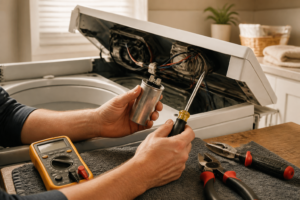
If you heard grinding or rumbling, the rear drum bearing has failed and requires full tub disassembly to access — follow the LG WM9000HVA bearing guide, which covers the same internal architecture shared across LG front-load platforms including this model. Before starting, unplug the machine and shut off both water supply valves to eliminate any risk of electrical or water hazards during the extended teardown. This is a multi-hour repair, so photograph wire harness routing as you go to simplify reassembly.
Step 4
Replace the bearing and spider arm together as a matched kit, because a failing bearing generates the uneven load and vibration that cracks or weakens the aluminum spider casting over time. Installing a new bearing on a stressed spider — or vice versa — frequently leads to repeat failure within months. Sourcing an OEM or equivalent-spec kit ensures the bearing seat dimensions match and the spider arms meet the original torque ratings.
Step 5
If the noise is a high-pitched squeal specifically during the spin cycle rather than a low rumble, the fault is in the drain pump bearing rather than the drum bearing. The pump runs hardest during spin to expel water, which is why the squeal peaks at that phase. Replace the drain pump assembly as a complete unit — the pump bearing is not serviceable separately and attempting to press it out risks damaging the pump housing.
Step 6
After completing the bearing or pump replacement, run a dedicated high-speed spin cycle with no laundry inside to verify the repair under load. Listen and feel for any residual grinding, vibration, or squealing — a successful repair produces a smooth, quiet spin with no perceptible drum wobble. If vibration persists, recheck that the spider arm bolts are torqued evenly and that the drum sits centered in the tub before closing the machine back up.
Where to Buy Replacement Parts
Find genuine OEM and aftermarket replacement parts for your LG WM3700HWA (Front Load) on Amazon:
- LG WM3700HWA drum bearing kit 4036ER2004A replacement
- LG front load washer spider arm 4434ER0003B
- LG washer inner drum baffles loose screw
When to Call a Professional
If the issue persists after completing all steps above, the problem may involve the sealed refrigerant system, a failed main control board, or wiring that requires specialized diagnostic equipment. Contact a licensed appliance technician — attempting sealed-system repairs without EPA 608 certification is illegal and unsafe.
How Much Does This Repair Cost?
DIY parts for fixing drum noise on the LG WM3700HWA — such as drum bearings, spider arms, or drum rollers — typically run between $20 and $80. A professional service call for the same repair usually costs $150 to $300 including labor. Tackling this repair yourself can save you $100 or more.
Frequently Asked Questions
Is it safe to keep running my LG WM3700HWA if the drum is making noise?
It is best to stop using the washer until you identify the cause, as continued use can worsen damage to the drum bearings or spider arm. Running a noisy machine risks more costly repairs down the line.
What are the most common causes of drum noise on the LG WM3700HWA?
The most frequent culprits are worn drum bearings, a damaged rear drum seal, or a failed spider arm assembly. Small objects like coins trapped between the drum and door seal can also cause rattling or scraping sounds.
How difficult is it to replace the drum bearings on this LG model?
Replacing the drum bearings on the LG WM3700HWA is an advanced repair that requires disassembling most of the machine, including splitting the outer tub. If you are not comfortable with appliance repair, hiring a qualified technician is strongly recommended.
Recommended Products
These are the parts and tools we recommend for this repair, based on compatibility and customer reviews:
- 4036ER2004A Front Load Washer Tub Bearings and Seal Kit Replacement for LG Models WM2233HW, WM2240CW, WM2250CW, WM2277HB, WM2277HS, WM2301HR, WM2301HS, WM2301HW for Kenmore 4280FR4048L 4280FR4048E
- Rear Tub Drum Bearing for LG 4280EN4048E Clothes Washing Machine
- 【UPGRADED】4434ER0003C Rear Drum Support (Spider) by Beaquicy – Replacement for Kenmore LG Washing Machine – Flange Shaft Assembly Replaces 4434ER0003A 4434ER0003B
As an Amazon Associate, I earn from qualifying purchases.