Not reaching full spin speed
This step-by-step repair guide walks you through fixing not reaching full spin speed on your GE GFW650SSNWW (Front Load). With the right tools and parts, most homeowners can complete this repair in 1–2 hours and avoid a costly service call.
🔨 Pro Tip from Dave
On the GFW650SSNWW, a lot of techs overlook the shock absorbers (part WH01X27373) as a spin speed culprit — worn shocks cause excessive drum movement, and the control board intentionally caps RPMs as a safety response. Don’t just clear error codes and call it done; always physically check shock absorber condition first or you’ll be back on the same call within weeks.
Part of our Top 20 Washing machine Models & Common Repair Issues Guide. Browse all washing machine repair guides for related models and issues.
This post contains affiliate links. As an Amazon Associate, I earn from qualifying purchases at no extra cost to you. In my years of fixing appliances, a failing inverter board is one of the first things I check when a GE front-loader like the GFW650SSNWW won’t reach full spin speed — it’s responsible for controlling motor power output, and even a subtle fault can cap your RPMs well below where they should be. The GE Washer Inverter Control Board OEM Replacement (WH22X38837) is the exact part I reach for on this model — OEM means no compatibility guesswork, and it swaps in cleanly without any firmware headaches.
“`html
Common Symptoms & Causes
These are the most common signs that your GE GFW650SSNWW is failing to reach full spin speed during a wash cycle.
- Clothes come out soaking wet after a completed cycle
- The drum spins slowly but never ramps up to high speed
- The washer displays error code E57 or E58 during the spin phase
- The machine vibrates excessively and stops mid-spin without finishing
This issue is most commonly caused by a worn or damaged motor control board, a failing drive motor, or an out-of-balance load sensor that prevents the unit from safely accelerating to full spin speed.
“`
Safety First
- Unplug the washing machine from the power outlet before starting any repair — never work on a live appliance.
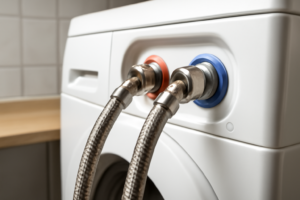
- Shut off the water supply valve before disconnecting any water lines or hoses.
- Wear work gloves when handling metal brackets, sheet metal edges, or sharp components.
- Take photos with your phone before disconnecting any wiring harnesses or connectors.
- Work in a well-lit area with enough floor space to lay removed panels flat.
Tools & Parts Needed
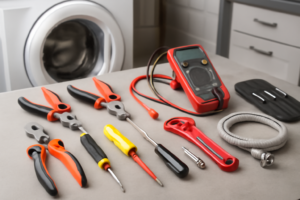
Essential Tools
- Phillips #2 screwdriver
- ¼” nut driver
- Torx T20 screwdriver
- Multimeter
- Bucket and towels
Replacement Parts
- Shock absorbers
- motor control board
- tachometer sensor
- multimeter
Step-by-Step Repair Instructions
Step 1
Redistribute the laundry and run a Spin Only cycle with a deliberately balanced load to isolate whether the problem is mechanical or software-related. If the drum reaches full speed with a balanced load but fails with actual laundry, the load-balance sensor calibration is misreading weight distribution rather than a hardware fault. No parts replacement is needed in this case — a recalibration or control board reset is the correct next step.
Step 2
Unplug the washer before opening the rear panel, then remove the four T20 Torx screws to access the shock absorbers. Manually compress each absorber — if any moves with little or no resistance, the damping fluid is gone and the absorber is worn out, which prevents the drum from stabilizing at high RPM. Always replace shock absorbers as a complete set so damping force remains equal on all sides.
Step 3
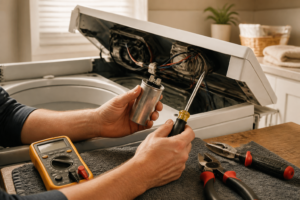
Locate the tachometer, which is the speed sensor mounted on the motor at the rear of the unit behind the belt guard, and test it with a multimeter set to Rx1. A healthy tachometer reads approximately 200 ohms; an open circuit or a reading significantly outside that range means the motor control board is receiving no accurate speed feedback and cannot ramp the motor up correctly. Replace the tachometer if the reading is out of spec, as this sensor is a common failure point on front-load motors.
Step 4
If your specific GFW650SSNWW sub-model uses a brush-type motor, inspect the carbon brushes for wear while the unit is still unplugged. Brushes worn down to less than one-quarter inch lose consistent contact with the commutator, causing the motor to drop torque before it can reach full spin RPM. Replace the brush set as a pair and blow out any carbon dust from the motor housing before reassembling.
If the inverter checks out fine, the next component I test is the main control board. I’ve seen plenty of cases where the main board fails to send the correct spin command signals, leaving the machine stuck at a low drum speed no matter what cycle you run. The WH22X37840 Main Control Board for GE Front-Load Washers covers a wide range of compatible part numbers including WH22X36637 and WH22X29532, so it’s a reliable pick even if your board revision has changed — something I appreciate when sourcing parts for slightly older production runs of this washer.
Step 5
With the washer running a spin cycle, use an oscilloscope or PWM-capable meter to monitor the signal from the motor control board to the motor. The PWM duty cycle should increase progressively as the spin speed command rises — a flat or non-changing signal confirms the board has failed to ramp output and is the source of the speed limitation. This test should only be performed if all mechanical and sensor components have already been verified, since a board replacement is the most expensive repair in this sequence.
Step 6
Reassemble all panels and fasteners, then run a full high-speed Spin cycle to verify the repair. The drum should reach 1,200 RPM without triggering an imbalance or motor fault code. If the fault code returns, document the exact code and cross-reference the GFW650SSNWW service manual, as a persistent code at this stage points to a control board communication fault rather than a mechanical issue.
Where to Buy Replacement Parts
Find genuine OEM and aftermarket replacement parts for your GE GFW650SSNWW (Front Load) on Amazon:
- GE GFW650SSNWW shock absorber WH01X26021 replacement
- GE front load washer motor control board WH12X26032
- GE washer tachometer sensor WH12X10526
When to Call a Professional
If the issue persists after completing all steps above, the problem may involve the sealed refrigerant system, a failed main control board, or wiring that requires specialized diagnostic equipment. Contact a licensed appliance technician — attempting sealed-system repairs without EPA 608 certification is illegal and unsafe.
“`html
How Much Does This Repair Cost?
DIY parts for fixing spin speed issues on the GE GFW650SSNWW typically run between $15–$120, depending on whether you need a lid switch, drive belt, or motor control board. A professional service call generally costs $150–$300 including labor. Tackling this repair yourself can save you $100 or more while restoring your washer to full performance.
Before you go replacing expensive boards, though, I always recommend testing the tachometer coil first — it’s a cheap part that gets overlooked constantly. The tachometer tells the control system how fast the motor is actually spinning, and if it’s sending a faulty signal, the washer will throttle back spin speed as a protective response. The Washing Machine Platen Tachometer Coil Motor Speed Measuring Coil is an inexpensive fix I’ve used to resolve this exact symptom, and I’d test or replace this before spending money on either control board.
“`
Frequently Asked Questions
Why is my GE GFW650SSNWW not reaching full spin speed?
The most common causes are an unbalanced load, a worn drive belt, or a faulty motor control board. Try redistributing the laundry evenly and running a test cycle before inspecting internal components.
Can an overloaded drum cause slow spin speeds on this model?
Yes, overloading prevents the drum from reaching proper RPM and strains the motor. Follow GE’s recommended load capacity to avoid repeated spin speed issues.
Do I need a technician to replace the motor control board?
Replacing the motor control board involves electrical components and should be handled by a qualified technician. Attempting this repair without experience can cause further damage or safety hazards.
Recommended Products
These are the parts and tools we recommend for this repair, based on compatibility and customer reviews:
- OEM GENUINE Washer Main Control Board For GE GFW650SPN2SN
- GE Washer Control Board – OEM Replacement (WH22X38697)
- OEM Genuine Washer Main Control Board for GE GFW550SSN2WW
As an Amazon Associate, I earn from qualifying purchases.