Agitator noise
This step-by-step repair guide walks you through fixing agitator noise on your Samsung WA54R7600AV (Top Load). With the right tools and parts, most homeowners can complete this repair in 1–2 hours and avoid a costly service call.
🔨 Pro Tip from Dave
On the WA54R7600AV, don’t overlook the agitator directional cogs — Samsung part DC97-16982A — which wear faster on this model than people expect due to the high-efficiency wash motion. A common mistake I see is technicians replacing just the dogs without checking if the agitator bolt has stripped the plastic hub beneath it, which means the noise comes right back within weeks.
Part of our Top 20 Washing machine Models & Common Repair Issues Guide. Browse all washing machine repair guides for related models and issues.
“`html
Common Symptoms & Causes
If your Samsung WA54R7600AV is making unusual agitator noise, watch for these specific signs during the wash cycle.
- A loud grinding or rattling sound occurs during the agitation cycle
- The agitator produces a clunking noise when reversing direction
- A repetitive knocking sound is heard only when the tub is loaded with laundry
- The agitator wobbles visibly while spinning and makes a scraping noise against the tub
These symptoms are most commonly caused by worn agitator dogs, a cracked agitator bolt, or a damaged drive block that has deteriorated through normal wear and heavy use over time.
“`
Safety First
- Unplug the washing machine from the power outlet before starting any repair — never work on a live appliance.
- Shut off the water supply valve before disconnecting any water lines or hoses.
- Wear work gloves when handling metal brackets, sheet metal edges, or sharp components.
- Take photos with your phone before disconnecting any wiring harnesses or connectors.
- Work in a well-lit area with enough floor space to lay removed panels flat.
Tools & Parts Needed
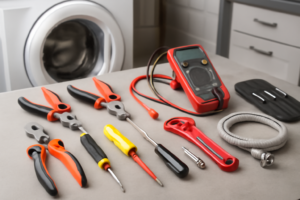
Essential Tools
- Phillips #2 screwdriver
- ¼” nut driver
- Torx T20 screwdriver
- Multimeter
- Bucket and towels
Replacement Parts
Step-by-Step Repair Instructions
Step 1
Unplug the washer before doing anything else to eliminate shock risk, then open the lid and grip the pulsator disc with both hands and try to spin it back and forth. You are feeling for grinding or clicking resistance, which indicates the directional cogs inside the pulsator have worn down and are no longer engaging cleanly during the agitation cycle. Confirm the noise occurs during agitation specifically, not spin, since that distinction will tell you whether the pulsator is the culprit or whether you have a deeper bearing problem.
Step 2
Remove the pulsator to access the worn cogs underneath: pry off the center cap with a flathead screwdriver, then use a half-inch socket to turn the center bolt counter-clockwise until it lifts free. The pulsator will pull straight up off the shaft once the bolt is out — do not pry it from the sides or you risk cracking the plastic disc. Pro tip: place the bolt and cap somewhere you cannot knock them into the tub while you work.
Step 3
Flip the pulsator over and inspect the underside where four small directional cogs sit in molded slots — these are the parts that create the back-and-forth agitation motion, and worn or chipped cogs are almost always the source of the clicking or grinding you heard. Snap each cog out by hand and replace the entire set at once, because if one has worn, the others are close behind and mixing old with new causes uneven engagement. Genuine Samsung replacement cog sets for this model are inexpensive and widely available online.
Step 4
Reassemble by seating the pulsator squarely over the shaft splines — you will feel it drop into alignment — then thread the center bolt clockwise by hand first to avoid cross-threading before finishing with the socket. Tighten the bolt until it is snug and firm, but stop there; overtightening can crack the pulsator hub or strip the plastic threads around the shaft. Press the center cap straight down until it clicks flush.
Step 5
If the noise you are hearing is a lower-pitched grinding or rumbling that occurs during the spin cycle rather than agitation, the pulsator cogs are not your problem — that symptom points to worn drum bearings lower in the machine. To confirm, run the washer with the lid up and listen: bearing noise comes from deep in the tub and often worsens with a heavy load. Bearing replacement on this model requires full tub disassembly and is best handed off to a certified technician unless you have appliance repair experience.
Step 6
Plug the washer back in and run a cycle using the Agitate setting, listening through the full cycle to confirm the clicking and grinding are gone. A healthy pulsator should produce only a soft rhythmic swishing as it moves the load. If noise persists after the cog replacement, recheck that all four cogs are fully seated and that the pulsator is properly aligned on the shaft splines before assuming a deeper issue.
Where to Buy Replacement Parts
Find genuine OEM and aftermarket replacement parts for your Samsung WA54R7600AV (Top Load) on Amazon:
- Samsung WA54R7600AV agitator WTW8120HW directional cogs repair kit
- Samsung top load washer pulsator replacement DC66-00611A
- Samsung washer bearing noise drum replacement
When to Call a Professional
If the issue persists after completing all steps above, the problem may involve the sealed refrigerant system, a failed main control board, or wiring that requires specialized diagnostic equipment. Contact a licensed appliance technician — attempting sealed-system repairs without EPA 608 certification is illegal and unsafe.
“`html
How Much Does This Repair Cost?
DIY parts for fixing agitator noise on the Samsung WA54R7600AV typically cost between $15–$80, depending on whether you need agitator dogs, a drive block, or a coupler. A professional service call for the same repair usually runs $150–$300 including labor. Tackling this repair yourself can save you $100 or more.
“`
Frequently Asked Questions
How do I know if the agitator or something else is causing the noise in my Samsung WA54R7600AV?
Run a small load and listen for the noise specifically during the agitation cycle. If the sound stops during the spin or fill cycles, the agitator assembly is almost certainly the source.
Can I fix the agitator noise myself without professional help?
Yes, most agitator repairs on the WA54R7600AV are DIY-friendly and require only basic tools like a socket wrench. Tightening or replacing the agitator dogs and bolt typically resolves the issue.
What parts commonly need replacing when the agitator is noisy?
The agitator dogs, also called cogs, are the most frequently worn parts and are inexpensive to replace. In some cases, the agitator bolt may also be loose or stripped and will need tightening or swapping out.
Recommended Products
These are the parts and tools we recommend for this repair, based on compatibility and customer reviews:
- UPGRADED 285811 Medium Cam Agitator Repair Kit by Seentech. Compatible with Whirlpool, Kenmore Washers – Replaces: AP3138838, 2744, 285746, 285811VP, 3347410, 3351001, 3363663, AH334650, EA334650
- 【Upgraded】 285811 Medium Cam Agitator Repair Kit Replacement – Compatible with Whirlpool, Kenmore Washers – Replaces AP3138838, 2744, 285746, 285811VP, 3347410, 3351001, 3363663, AH334650, EA334650
- BlueStars Ultra Durable 285809 Washer Short Cam Agitator Repair Kit – Compatible with Whirlpool & Maytag Washers – Replaces 3951650 3951682 AP3094543 PS334648
- Samsung DC97-21786A Washer Washplate, Pulsator Assembly (Replaces: DC97-20884A)
As an Amazon Associate, I earn from qualifying purchases.