🔩 Downdraft Filter Repair Guide for Jenn-Air JGS1450DS (Gas Range – Downdraft)
💡 This repair guide will be expanded with detailed instructions. Claude AI will add comprehensive explanations, safety tips, troubleshooting advice, and product recommendations.
🔨 Pro Tip from Dave
When replacing the downdraft filter on the JGS1450DS, don’t overlook the filter housing channel — grease often hardens in the track and prevents the new filter (W10120839) from seating flush, which causes air bypass and makes the new filter fail prematurely. A common mistake is forcing the grate back down without cleaning that channel first; take 60 seconds to wipe it out with a degreaser and you’ll get a much better seal.
🔍 Symptoms
Reduced ventilation, grease buildup
🔧 Part Numbers
- W10120839
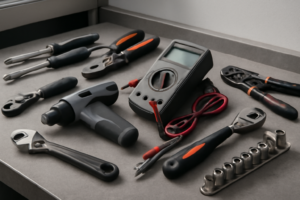
🔧 Required Tools
✔️ Difficulty & Cost
Difficulty: Very Easy
Estimated Cost: $20-50
✔️ Repair Steps
Step 1: Remove downdraft grate
Remove Downdraft Grate
1. Turn off the range completely using the control panel, then locate the circuit breaker for your range (typically labeled “Range” or “Kitchen Appliances” in your electrical panel) and switch it to the OFF position to cut all power to the unit.
2. Locate the downdraft grate at the rear center of the cooktop surface between the burners. The grate is a rectangular metal grille measuring approximately 4 inches wide by 20 inches long, sitting flush with or slightly raised above the cooktop surface.
3. Grip both ends of the grate with your hands, positioning your fingers underneath the front edge (the side closest to you when standing at the range) and your thumbs on top.
4. Lift straight up with steady, even pressure using both hands simultaneously. The grate lifts out without any screws or clips—it simply sits in a channel. You’ll feel the grate release from its seated position after lifting approximately 1/4 inch.
5. If the grate resists lifting, rock it gently side-to-side (left to right) while maintaining upward pressure. Grease buildup along the edges can cause the grate to stick in its channel.
6. Once free, set the grate aside on a protected surface like a towel on your counter. The grate will have grease and cooking residue on the underside.
7. Look down into the now-exposed downdraft chamber. You’ll see the metal filter assembly directly below where the grate was positioned, sitting approximately 3-4 inches down from the cooktop surface.
8. Check for any large debris (food particles, aluminum foil pieces) sitting on top of the filter. Remove any visible debris by hand before proceeding to filter removal.
Troubleshooting Tips for This Step
**If the grate won’t lift:** – Accumulated grease acts like adhesive. Slide a thin plastic putty knife (not metal, which can scratch) along the front edge where the grate meets the cooktop to break the grease seal. – Check that you’re lifting straight up, not at an angle. Tilting causes the grate to bind against the sides of the channel.
**If the grate feels loose or rattles when cooking:** – Inspect the rubber bumpers on the underside corners of the grate (4 total, one at each corner). These bumpers should be intact and approximately 1/8 inch thick. Replace any missing or compressed bumpers with heat-resistant rubber bumpers rated to 400°F before reinstalling.
**If you see excessive grease buildup:** – This indicates the filter hasn’t been cleaned regularly. The next steps will address filter removal and cleaning, but note that heavy grease accumulation means the blower system may also need cleaning after filter replacement.
Step 2: Pull out old filter
Pull Out Old Filter
1. Locate the downdraft filter housing at the rear center of the cooktop, positioned between the two rear burners. The filter sits in a metal housing that’s approximately 10 inches wide and 3 inches deep.
2. Identify the filter release tabs on both sides of the filter assembly. These are small metal tabs, approximately 1 inch long, located on the left and right edges of the filter frame, about 2 inches below the top surface of the cooktop.
3. Press both release tabs inward simultaneously using your thumbs while gripping the filter frame with your remaining fingers. Apply firm pressure—the tabs require approximately 5-8 pounds of force to compress.
4. While maintaining pressure on both tabs, lift the filter straight upward approximately 1 inch. You’ll feel the filter disengage from the mounting slots with a slight releasing sensation.
5. Tilt the front edge of the filter (the edge closest to you) upward at a 30-degree angle. This prevents the filter from catching on the internal ductwork lip located approximately 2 inches below the cooktop surface.
6. Pull the filter toward you in a smooth, continuous motion, maintaining the 30-degree angle until the rear edge clears the housing opening. The filter will slide out approximately 12-14 inches total.
7. Inspect the filter mounting slots inside the housing. You’ll see two rectangular metal channels, one on each side, running front to back. Check for grease buildup or debris in these channels—accumulated grease can make filter removal difficult. If present, wipe the channels clean with a degreasing spray and paper towels before installing the new filter.
Troubleshooting Tips for This Step
**If the filter won’t release after pressing the tabs:** The tabs may be stuck due to grease buildup. Spray a penetrating lubricant (like WD-40) at the base of each tab where it meets the filter frame. Wait 2 minutes, then press the tabs again while applying upward lifting pressure.
**If the filter catches or binds while pulling out:** Stop pulling immediately. Lower the front edge back down to horizontal, then raise it to a steeper 45-degree angle. The binding indicates the filter edge is hitting the ductwork transition—increasing the tilt angle provides clearance.
**If only one release tab compresses:** The opposite tab is likely corroded or stuck. Insert a flathead screwdriver (1/4-inch blade width) between the stuck tab and the filter frame. Apply gentle prying pressure to manually release that side while pressing the functional tab on the other side.
**If the filter pulls partially out but stops at 6-8 inches:** Internal grease deposits are creating friction. Pull the filter back to its starting position, spray degreaser into the mounting channels, wait 3 minutes, then attempt removal again with the 30-degree tilt angle maintained throughout the pull.
**What success looks like:** The filter should slide out smoothly with no grinding or scraping sounds. The mounting channels should be visible and clean after filter removal.
Step 3: Clean or replace filter
Clean or Replace Filter
1. Lay the filter flat on a work surface with the mesh side facing up to inspect for damage.
2. Check for these conditions to determine if you need to clean or replace: – **Clean if**: Filter shows grease buildup but mesh is intact with no tears or holes – **Replace if**: You see tears larger than 1/4 inch, rust spots, or collapsed/flattened mesh areas
If Cleaning the Filter:
3. Fill a sink or large basin with hot water (as hot as your tap provides, typically 120-140°F).
4. Add 1/4 cup of dishwasher detergent or degreasing dish soap to the water and mix until dissolved.
5. Submerge the filter completely in the soapy water and let it soak for 15-20 minutes to loosen baked-on grease.
6. After soaking, scrub both sides of the filter using a soft-bristled brush (like a toothbrush or vegetable brush), working in circular motions. Apply firm pressure but do not bend the mesh.
7. Pay special attention to the edges and corners where grease accumulates most heavily—scrub these areas for an additional 30 seconds each.
8. Rinse the filter under hot running water until all soap residue is gone and water runs clear through the mesh (approximately 30-60 seconds).
9. Shake the filter vigorously 3-4 times to remove excess water.
10. Stand the filter upright against a wall or place it on a drying rack. Allow it to air dry completely for 2-3 hours before reinstallation. The filter must be completely dry to prevent mold growth.
11. Once dry, hold the filter up to a light source. You should see light passing through at least 80% of the mesh openings. If more than 20% of the mesh remains blocked with grease, repeat the cleaning process.
If Replacing the Filter:
12. Verify you have the correct replacement by comparing dimensions: The Jenn-Air JGS1450DS uses a filter measuring approximately 19 inches wide by 9 inches deep. Match the new filter against the old one—they should be identical in size and mesh pattern.
13. Check that the new filter has the same frame style (typically aluminum with a riveted or folded edge construction).
Troubleshooting Tips:
**Problem: Filter still looks greasy after cleaning** – Re-soak in fresh hot soapy water for another 15 minutes, then scrub again focusing on problem areas
**Problem: White residue remains after rinsing** – This is soap buildup—rinse under hot water for an additional 2 minutes until completely gone
**Problem: Filter has minor tears (less than 1/4 inch)** – You can temporarily continue using it, but order a replacement as effectiveness is reduced by approximately 15-20% per small tear
**Problem: Unsure if filter is dry enough** – Touch the mesh with your fingertip—it should feel room temperature and completely dry with no cool dampness
14. Proceed to Step 4 with your cleaned or new replacement filter ready for installation.
Step 4: Insert new filter
Insert New Filter
1. Remove the new downdraft filter from its packaging and orient it so the metal mesh side faces toward you and the airflow direction arrow (printed on the filter frame) points downward toward the blower housing.
2. Hold the filter with both hands, one on each side of the rectangular frame, positioning it vertically in front of the filter slot opening.
3. Align the filter’s metal tabs on the left and right edges with the corresponding vertical slots inside the downdraft housing—these slots are located approximately 1 inch from each side wall of the housing cavity.
4. Slide the filter straight down into the housing, keeping it vertical and centered between the side walls. The filter should drop approximately 8-10 inches until the bottom edge rests on the rubber gasket seal at the base of the housing.
5. Push the top edge of the filter forward (toward the cooktop) until you hear a distinct click—this indicates the spring-loaded clips at the top of the housing have engaged with the notches on the filter frame’s upper edge.
6. Grip the filter frame and pull upward with approximately 5 pounds of force to verify the clips have properly secured it—the filter should not move upward more than 1/8 inch if correctly installed.
7. Visually inspect the left and right edges of the filter to confirm both metal tabs are fully seated in their slots with no gaps visible between the filter frame and housing walls.
8. Run your finger along the bottom edge of the filter where it meets the rubber gasket—you should feel no air gaps, and the filter should sit flush against the seal around its entire perimeter.
Troubleshooting Tips for This Step
**If the filter won’t slide down fully:** – Remove the filter and inspect the vertical slots for debris or old grease buildup that blocks insertion – Clean the slots with a degreasing spray and a thin brush or cloth – Verify you’re using the correct replacement filter by comparing the dimensions: the filter should measure approximately 17 inches wide by 9 inches tall
**If you don’t hear a click when pushing the filter forward:** – Remove the filter and locate the two spring-loaded clips at the top of the housing (approximately 4 inches from each side) – Press each clip inward with your finger to verify it moves freely and springs back—if stuck, spray with silicone lubricant – Reinsert the filter and push the top edge forward with more force (up to 10 pounds of pressure) until engagement occurs
**If the filter wobbles or feels loose after installation:** – Remove the filter and inspect the notches on the upper corners of the filter frame—they should be clean and undamaged – Verify the spring clips inside the housing have not become bent or misaligned by looking into the housing with a flashlight – If clips are bent, use needle-nose pliers to gently bend them back to their original position, approximately 1/4 inch inward from the housing wall
**If air gaps exist around the filter perimeter:** – The rubber gasket at the bottom may be compressed unevenly—press down firmly on all four corners of the filter frame with 10 pounds of force to properly seat it
Step 5: Replace grate
Replace Grate
1. Locate the cooktop grate(s) you removed in Step 1 – these are the cast iron or porcelain-coated grates that sit on top of the burners.
2. Inspect each grate for proper orientation by identifying the raised burner ring (circular indent) on the underside – this ring must align with the burner cap below it.
3. Starting with the right front grate, position it so the burner ring aligns directly over the corresponding burner assembly – you’ll see the black burner cap with flame ports visible through the ring opening.
4. Lower the grate straight down until it sits flush on the cooktop surface – the grate feet (small rubber or metal nubs on each corner) should contact the cooktop evenly with no rocking motion.
5. Verify the grate is level by pressing each corner – if one corner lifts when you press the opposite corner, lift the grate and rotate it 180 degrees, then set it down again.
6. Move to the left front grate and repeat substeps 3-5, ensuring the burner ring aligns with its burner cap.
7. Install the right rear grate, aligning the burner ring and verifying level placement.
8. Install the left rear grate as the final piece, checking alignment and stability.
9. If your model has a center oval or bridge grate (used for griddle placement), position it between the four main grates with the long axis running front-to-back, ensuring it sits flush without interfering with adjacent grates.
10. Test each grate for stability by applying downward pressure at each corner – there should be no movement or rattling sounds.
11. Check the gap between adjacent grates – you should see approximately 1/8 to 1/4 inch spacing, allowing the downdraft vent slots (running down the center of the cooktop) to remain unobstructed.
12. Verify the downdraft vent slots are completely visible and not covered by any grate edges – slide your finger along the center vent opening to confirm no metal is blocking the airflow path.
Troubleshooting Tips for This Step
**Problem: Grate rocks or wobbles when pressed** – Lift the grate and inspect the four feet on the underside for debris or food buildup. – Wipe each foot with a damp cloth to remove residue. – Check if a foot is bent or damaged – if so, the grate may need replacement. – Verify you haven’t swapped grates between positions – each grate is sized for its specific location (front grates are typically smaller than rear grates).
**Problem: Grate doesn’t sit flush or appears too high** – Confirm the burner cap below is properly seated on the burner base – a misaligned cap will prevent the grate from sitting level. – Remove the grate and check that the burner cap’s alignment tabs fit into the corresponding slots on the burner base. – Reseat the burner cap by lifting it straight up, rotating it until the tabs align, then pressing down until it clicks into place.
**Problem: Grates cover the downdraft vent slots** – You’ve likely installed grates in the wrong positions – remove all grates and verify each one’s position by matching the burner ring size to the burner assembly size below. – Front burners are typically smaller (9,500 BTU) than rear burners (15,000 BTU) – install smaller grates at the front positions.
📝 Next Steps: This post will be expanded by Claude AI with:
- Detailed step-by-step instructions with explanations
- Safety warnings and precautions
- Tool recommendations and usage tips
- Troubleshooting common issues
- Product recommendations (repair kits, tools) from Amazon via Firecrawl
- Affiliate links integrated naturally into sentence form
🔧 Recommended Parts & Tools
You can find the replacement part you need, such as this Downdraft Stovetop Filter Replacement for 71002111 Jenn Air Filter Downdraft …, on Amazon. For this repair, you’ll need a Replacement for Dacor Downdraft Vent Switch 76472 OEM which includes all the necessary components. You can find the replacement part you need, such as this Whirlpool W10120839A Genuine OEM Over-The-Range Grease Filter For Microwaves …, on Amazon.
As an Amazon Associate, I earn from qualifying purchases.
How Much Does This Repair Cost?
DIY replacement filter W10120839 typically runs $20–$45 depending on the supplier, making this one of the most affordable fixes on this model. If you call a technician for this repair, expect to pay $75–$150 once you factor in the service call fee and labor, even though the actual hands-on time is under 10 minutes.
Recommended Products
These are the parts and tools we recommend for this repair, based on compatibility and customer reviews:
- Downdraft Stovetop Filter Replacement for 707929 Jenn Air Filter Downdraft 14” x 11.4”- Grease Screen for Cooktop Fits Into Jenair Stove Filters Vents – Blocks Grease Protecting the Oven (2-pack)
- Downdraft Stovetop Filter Replacement for 71002111 Jenn Air Filter Downdraft 15.6” x 6.4” – Range Oven Filter Fits Into Jennair Downdraft Filter Vent and Protects the Stove Fan (2-Pack)
- Bagean Downdraft Stovetop Filter Replacement 15.60” x 6.40” – 71002111 Fits Jenn Air Downdraft Grease Filter – Range Oven Filters for Jennair Vent Protects the Stove Fan & Filters the Air (1-Pack)
- Downdraft Stovetop Filter 5.67” x 15.63” Replacement for Whirlpool Jennair W10240990 W10905834 Downdraft Filter Grease Screen for Cooktop Oven Vent – Blocks Grease From Entering Stovetop Vent (Black)
As an Amazon Associate, I earn from qualifying purchases.