🔩 Door Gasket Repair Guide for Samsung NX58H5600SS (Gas Range)
💡 This repair guide will be expanded with detailed instructions. Claude AI will add comprehensive explanations, safety tips, troubleshooting advice, and product recommendations.
🔨 Pro Tip from Dave
When installing part DG94-00520B on this model, start pressing the gasket in at the top corners first — the NX58H5600SS door frame has slightly tighter corner channels than other Samsung ranges, and starting from the bottom causes bunching that leads to gaps. A common mistake I see is forcing the gasket with a screwdriver, which nicks the channel and creates new leak points.
🔍 Symptoms
Heat escaping, poor seal
🔧 Part Numbers
- DG94-00520B
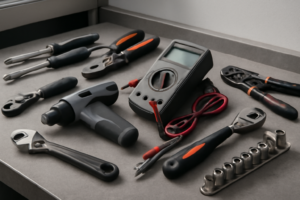
🔧 Required Tools
✔️ Difficulty & Cost
Difficulty: Easy
Estimated Cost: $30-60
✔️ Repair Steps
Step 1: Remove old gasket
Remove Old Gasket
1. Open the oven door fully to a 90-degree angle so it’s parallel with the floor.
2. Locate the door gasket – it’s the rubber seal running around the perimeter of the oven door opening, sitting in a metal channel approximately 1/4 inch deep.
3. Start at the top-left corner of the door opening and grip the gasket with your thumb and forefinger where it meets the metal channel.
4. Pull the gasket straight out from the channel using firm, steady pressure – it’s held in place by friction, not adhesive or fasteners. You’ll feel it release from the channel with a popping sensation.
5. Work your way around the entire perimeter of the door, pulling 6-8 inches of gasket out at a time. Continue clockwise around the top, down the right side, across the bottom, and up the left side until the entire gasket is removed.
6. Inspect the metal channel for any torn gasket material that remained behind. The channel should be completely empty and clean.
7. Use a flathead screwdriver (1/4 inch wide) to scrape out any stuck gasket pieces from the channel. Insert the screwdriver blade into the channel and run it along the entire perimeter, removing all residual rubber material.
8. Wipe down the metal channel with a damp cloth to remove dust, grease, and debris. The channel must be completely clean for the new gasket to seat properly.
9. Check the channel for damage – run your finger along the entire length feeling for bent sections, dents, or sharp edges. If you find bent areas, use needle-nose pliers to straighten the metal back to its original shape by gripping the bent section and gently pushing it back into alignment.
10. Inspect the door opening corners where the channel changes direction. Remove any accumulated debris or old gasket material from these 90-degree corners using a small flatblade screwdriver or a wire brush.
11. Wipe the channel one final time with a clean, dry cloth to ensure no moisture remains.
Troubleshooting Tips for This Step
**If the gasket won’t pull out easily**: The gasket may have baked onto the channel due to heat exposure. Heat the gasket with a hairdryer on high setting for 30-45 seconds to soften the rubber, then pull again with increased force.
**If gasket pieces tear and break apart during removal**: This is common with old gaskets. Remove the gasket in smaller 2-3 inch sections instead of trying to pull long pieces. Use the flathead screwdriver to pry stubborn pieces from underneath.
**If the metal channel is severely bent or damaged**: The new gasket won’t seal properly. Bent sections up to 1/8 inch can be straightened with pliers. Damage beyond this requires professional channel replacement as the door frame needs disassembly.
**How to verify the channel is ready**: Run your finger completely around the empty channel – it should feel smooth with no obstructions, sticky residue, or protruding metal. The channel depth should be consistent at approximately 1/4 inch deep throughout.
Step 2: Clean channel
Clean Channel
1. Locate the metal channel around the oven door opening where the old gasket was seated – this is a continuous U-shaped groove approximately ¼ inch wide and ⅛ inch deep that runs along the top and both sides of the door frame.
2. Inspect the channel for remaining adhesive residue from the old gasket – you’ll see black rubber fragments, dried adhesive patches, and possibly grease buildup accumulated over years of use.
3. Spray a household degreaser (such as Simple Green or dish soap mixed with warm water in a spray bottle) directly into the channel, covering all surfaces where the old gasket was attached.
4. Let the degreaser sit for 3-5 minutes to break down the adhesive and grease – the solution will appear to darken as it lifts the residue.
5. Use a plastic putty knife or old credit card to scrape along the length of the channel, applying firm pressure at a 45-degree angle to remove loosened adhesive without scratching the metal surface underneath.
6. Wipe the channel with a clean microfiber cloth or paper towels to remove the scraped debris – you’ll need to fold and refold the cloth multiple times as it collects black residue.
7. Examine the channel corners at the top left and top right where the channel angles downward – these corners typically trap the most debris and require extra attention.
8. Spray degreaser again on any remaining stubborn adhesive spots (these will appear as dark, sticky patches that didn’t come off with the first pass).
9. Use a nylon-bristle brush or old toothbrush to scrub the corners and any textured areas of the channel where adhesive remains stuck – apply circular scrubbing motions with moderate pressure for 10-15 seconds per area.
10. For extremely stubborn adhesive that doesn’t respond to degreaser, apply a small amount of rubbing alcohol (70% or higher isopropyl alcohol) directly to the residue using a cotton swab.
11. Scrape again with the plastic putty knife after the alcohol has loosened the adhesive (wait 30-60 seconds for the alcohol to penetrate).
12. Wipe the entire channel one final time with a clean, dry cloth – run your finger along the channel surface to verify it feels smooth with no sticky or rough patches remaining.
13. Inspect the cleaned channel under good lighting – the metal should appear silver/gray with no black rubber pieces, no sticky residue, and no visible buildup.
Troubleshooting This Step
**If adhesive won’t come off after scraping:** The adhesive has likely hardened over time. Apply heat using a standard hair dryer set on high, holding it 2-3 inches from the channel for 30-45 seconds to soften the adhesive, then immediately scrape while warm.
**If the channel appears rusty or corroded:** Light surface rust is normal. Use fine-grit sandpaper (220-grit) to gently sand the rusty spots until the metal appears clean, then wipe away dust before proceeding.
**If you accidentally scratch the metal channel with your scraping tool:** Minor scratches won’t affect gasket adhesion. The new gasket adhesive will fill small imperfections as long as the surface is clean.
Step 3: Press new gasket into channel
Press New Gasket into Channel
Installation Process
1. Start at the top center of the oven door frame where the channel is most accessible and visible.
2. Hold the gasket with the bulb (rounded edge) facing outward toward you and the flat backing edge aligned with the metal channel groove.
3. Place the gasket’s flat backing edge into the channel groove at the top center point, pushing it approximately 1/4 inch deep into the channel until you feel it seat against the bottom of the groove.
4. Using your thumbs, press down along the gasket in 2-3 inch sections, working from the center toward the right corner, applying firm downward pressure (approximately 10-15 pounds of force—similar to pressing down on a stapler).
5. When you reach the top right corner, press the gasket firmly into the curved corner section, ensuring it follows the 90-degree bend without bunching or folding—the gasket should lay flat in the channel with no gaps.
6. Continue pressing the gasket down the right side of the door frame in 2-3 inch sections from top to bottom, maintaining the same pressure.
7. At the bottom right corner, repeat the corner installation technique, pressing the gasket to follow the curve smoothly.
8. Work across the bottom of the door from right to left, pressing in 2-3 inch sections.
9. Complete the installation at the bottom left corner and up the left side, finishing where you meet your starting point at the top center.
10. Run your finger firmly along the entire gasket perimeter, applying additional pressure to any sections that appear raised or loose—the gasket backing should be flush with or slightly below the top edge of the channel.
11. Check all four corners by pressing directly on each corner—there should be no gaps between the gasket and the channel, and the gasket should maintain its rounded shape without flattening excessively.
Verification
12. Visually inspect the entire gasket perimeter—the bulb edge should protrude approximately 1/2 inch beyond the door frame edge, forming a consistent seal profile around all sides.
13. Gently pull outward on the gasket at 6-8 points around the door (top, corners, sides, bottom)—it should resist with moderate force and not pull free from the channel.
14. Look for any twisted sections where the gasket may have rotated during installation—the flat backing must face into the channel, not sideways.
Troubleshooting This Step
**If the gasket won’t seat fully in the channel:** The channel may contain old adhesive residue. Remove the gasket, clean the channel again with a plastic scraper and isopropyl alcohol, let dry 5 minutes, then retry installation.
**If the gasket bunches at corners:** Pull the gasket out of that corner section, stretch it slightly (approximately 1/2 inch) to remove slack, then press it back into the channel while holding tension.
**If the gasket pulls out easily during the tug test:** Remove that section and press it in with more force, ensuring the backing is centered in the channel groove, not riding on one edge.
**If one section appears flatter than others:** The gasket may be twisted. Remove that 6-8 inch section, rotate the gasket so the bulb faces outward, and reinstall.
Step 4: Start at top, work around
Install the New Door Gasket Starting at Top, Working Around
1. Hold the new door gasket with the flat mounting edge facing toward you and the ribbed or bulbous seal edge facing away from the door frame.
2. Locate the center point at the top of the oven door opening – this is directly above the oven cavity, equidistant from both sides (approximately 15 inches from each side edge on this model).
3. Position the gasket’s top center point at this location, aligning the flat mounting edge with the metal channel that runs around the door frame perimeter.
4. Press the gasket’s mounting edge firmly into the channel using your thumbs, applying 10-15 pounds of pressure. You’ll feel the edge seat into the channel groove – it should sit flush with no gaps visible between gasket and channel.
5. Working from center top toward the right corner, press 2-3 inches of gasket at a time into the channel. Push straight down and slightly forward to ensure the mounting edge fully enters the channel depth.
6. At the top right corner, compress the gasket slightly (about 1/4 inch) to create a rounded corner without bunching. The gasket material should bend smoothly around the 90-degree corner, not fold or crease.
7. Continue down the right side, pressing 2-3 inch sections at a time. Maintain consistent pressure – if one section pops out while installing the next, you’re not pressing firmly enough. Go back and re-seat any loose sections.
8. At the bottom right corner, repeat the compression and smooth corner installation from step 6.
9. Work across the bottom edge from right to left, checking every 6 inches that the gasket remains seated in the top and side sections already installed.
10. At the bottom left corner, ensure adequate gasket material remains to complete the installation without stretching. If the gasket appears tight, remove the last 12 inches on the bottom and left side, pull the gasket taut (but not stretched), and reinstall.
11. Continue up the left side to meet your starting point at top center.
12. At the final connection point (top center), the gasket ends should meet precisely without overlap or gaps. If there’s a 1/4-inch or larger gap, the gasket is stretched – remove and reinstall with less tension. If the ends overlap more than 1/8 inch, the gasket is bunched – remove and reinstall with more even distribution.
13. Run your finger completely around the installed gasket, applying firm pressure to verify every section is fully seated in the channel. You should feel no loose sections or raised areas.
14. Close the oven door and check the seal: the gasket should compress evenly all around with no visible light gaps when viewed from inside the kitchen.
**TROUBLESHOOTING:** – **If gasket keeps popping out during installation**: The mounting edge isn’t fully in the channel. Press harder (15-20 pounds) and push forward slightly as you press down. – **If corners bunch or fold**: Remove 6 inches on each side of the corner and reinstall, compressing the gasket 1/4 inch while forming the corner. – **If gasket appears twisted**: The mounting edge orientation is wrong. Remove the twisted section, rotate the gasket 180 degrees, and reinstall.
📝 Next Steps: This post will be expanded by Claude AI with:
- Detailed step-by-step instructions with explanations
- Safety warnings and precautions
- Tool recommendations and usage tips
- Troubleshooting common issues
- Product recommendations (repair kits, tools) from Amazon via Firecrawl
- Affiliate links integrated naturally into sentence form
🔧 Recommended Parts & Tools
You can find the replacement part you need, such as this 40FT Extra Long Kerf Weather Stripping Door Seal for Large Gaps and Easy Inst…, on Amazon. For this repair, you’ll need a for Bilco Basement Door Weatherstrip Kit (4 Cap Seal Pad,1 Bulb Trim Gasket,1… which includes all the necessary components. You can find the replacement part you need, such as this Upgraded DG94-00520A Gas Range Oven Igniter Fit for Sam-sung NX58H5600SS Nx58…, on Amazon. You can find the replacement part you need, such as this DC97-18094B Washer Door Boot Seal Gasket Diaphragm for Samsung Washing Machin…, on Amazon.
As an Amazon Associate, I earn from qualifying purchases.
How Much Does This Repair Cost?
The replacement gasket DG94-00520B typically runs $25–$45 online for DIY repair. If you call a technician, expect to pay $80–$150 total once you factor in the service call fee and labor, even though the job itself takes under 20 minutes.
Recommended Products
These are the parts and tools we recommend for this repair, based on compatibility and customer reviews:
- DG63-00255B Gas Range Oven Door Gasket Seal(86″ Long/ 27 Mounting Clips)- Compatible with Samsung Ranges or Ovens, Replaces DG63-00255A, 3554990, AP5653446, PS5576952,EAP5576952
- DG63-00255B Range Oven Door Gasket Seal With 27 Mounting Clips Compatible with Samsung Replaces DG63-00255A 3554990 AP5653446 PS5576952 EAP5576952
- Upgraded DG94-00520A Gas Range Oven Igniter Fit for Sam-sung NX58H5600SS Nx58h9500WS Replacement for G-E Whirl-pool Hot-point 2692271 AP5577941 WB13K21 Norton 501a W10918546 Range Oven by BOGDA
- DG63-00255B Gas Range Oven Door Gasket Seal(86″ Long/ 27 Mounting Clips)- Compatible with Samsung Ranges or Ovens, Replaces DG63-00255A, 3554990, AP5653446, PS5576952,EAP5576952
As an Amazon Associate, I earn from qualifying purchases.